
Packaged Wastewater Treatment Plants
BİOSU is the packaged biological treatment family GESU designs and builds for domestic and small-scale industrial wastewater. Three configurations — SBR, MBR and MBBR — completed in our own factory and delivered ready to run.
What Is a BİOSU Packaged Plant, and Who Is It For?
BİOSU is GESU’s packaged biological wastewater treatment family: the unit is manufactured complete in our factory in Bursa and delivered to site ready for service. Packaged treatment is the answer where a site cannot connect to a sewer network, where the flow is too small to justify a central plant, or where the site has to meet its own discharge limit.
Hotels and holiday villages, housing estates, village and small-town municipalities, the domestic wastewater of factory personnel, schools, dormitories and campuses, and construction or field camps are the typical applications. The correct model is always selected from the wastewater characteristics and the discharge target — never from the capacity figure alone.
Three Configurations, One Family
BİOSU plants are built in three configurations. Whichever is selected, it is produced to the same manufacturing standard.
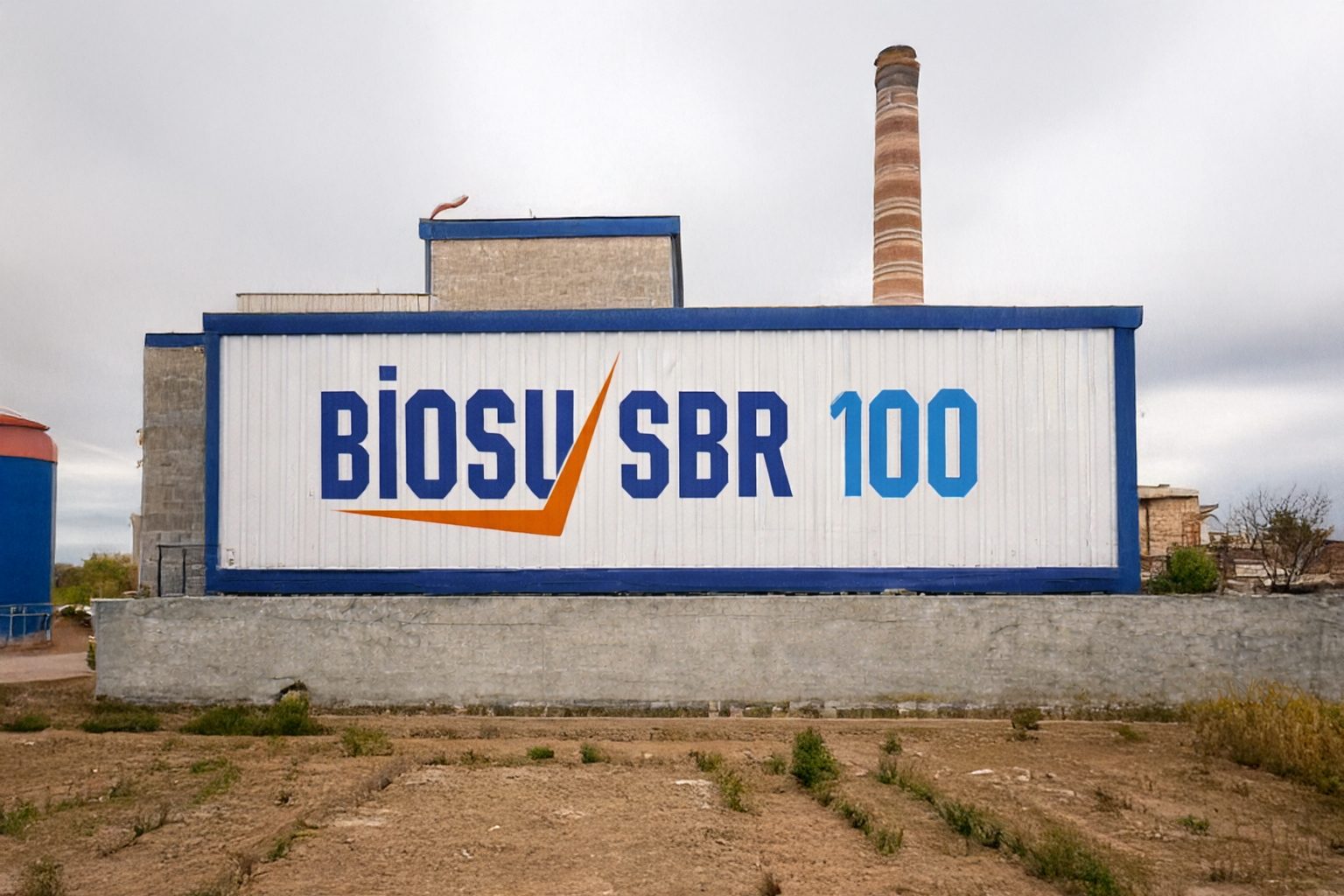
BİOSU SBR
Best sellerSequencing batch reactor. Filling, aeration, settling and decanting all happen in a single tank. Because it runs in batches, cycle times can be tuned to a variable load. The most economical option.
- •50 – 5,000 population equivalent
- •Low capital cost
- •Simple to operate
- •Nutrient removal included
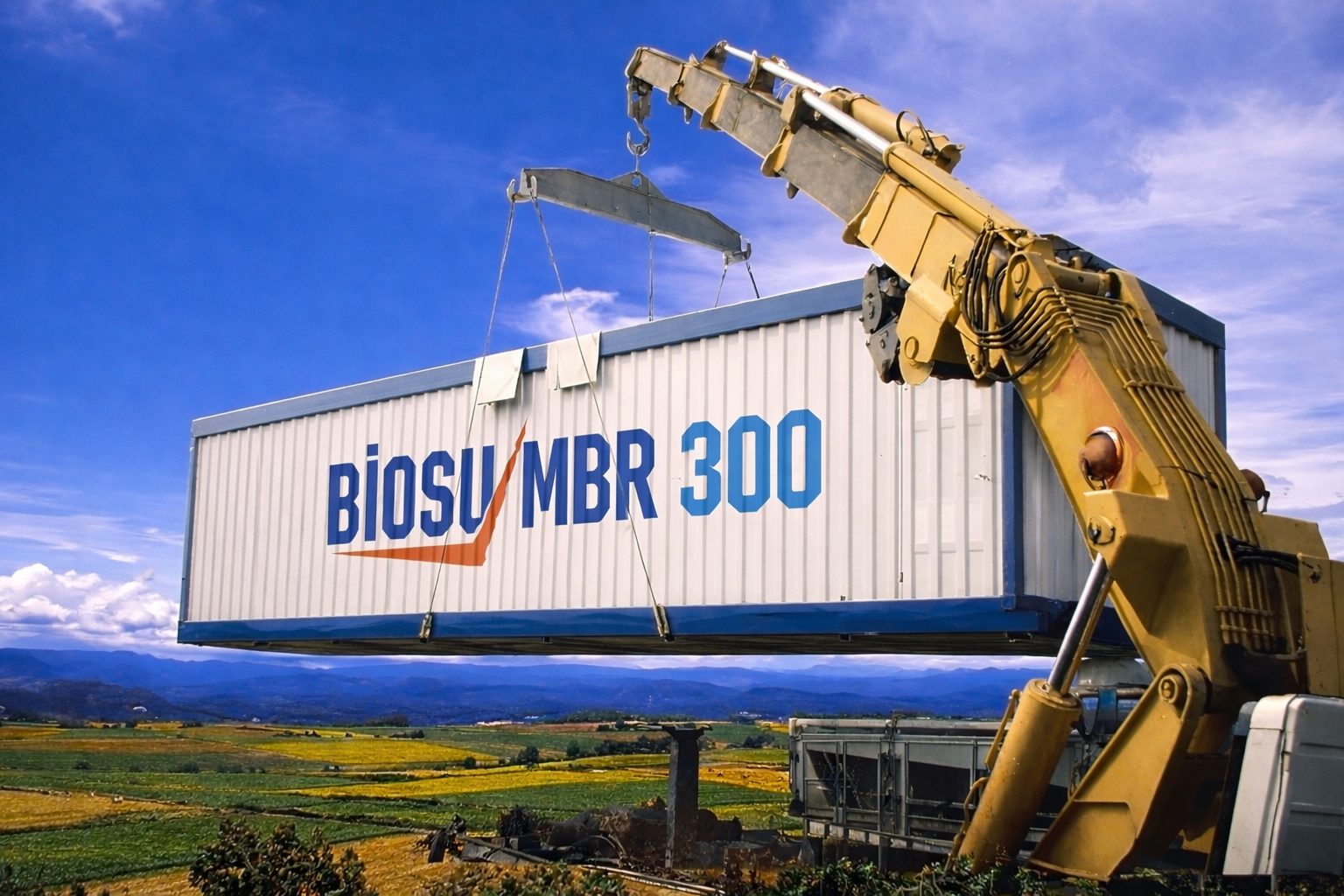
BİOSU MBR
PremiumMembrane bioreactor. The membrane barrier gives the highest effluent quality in the family — an effluent suitable for water reuse.
- •100 – 10,000 population equivalent
- •Reuse-quality effluent
- •Compact layout
- •Bacteria and virus barrier
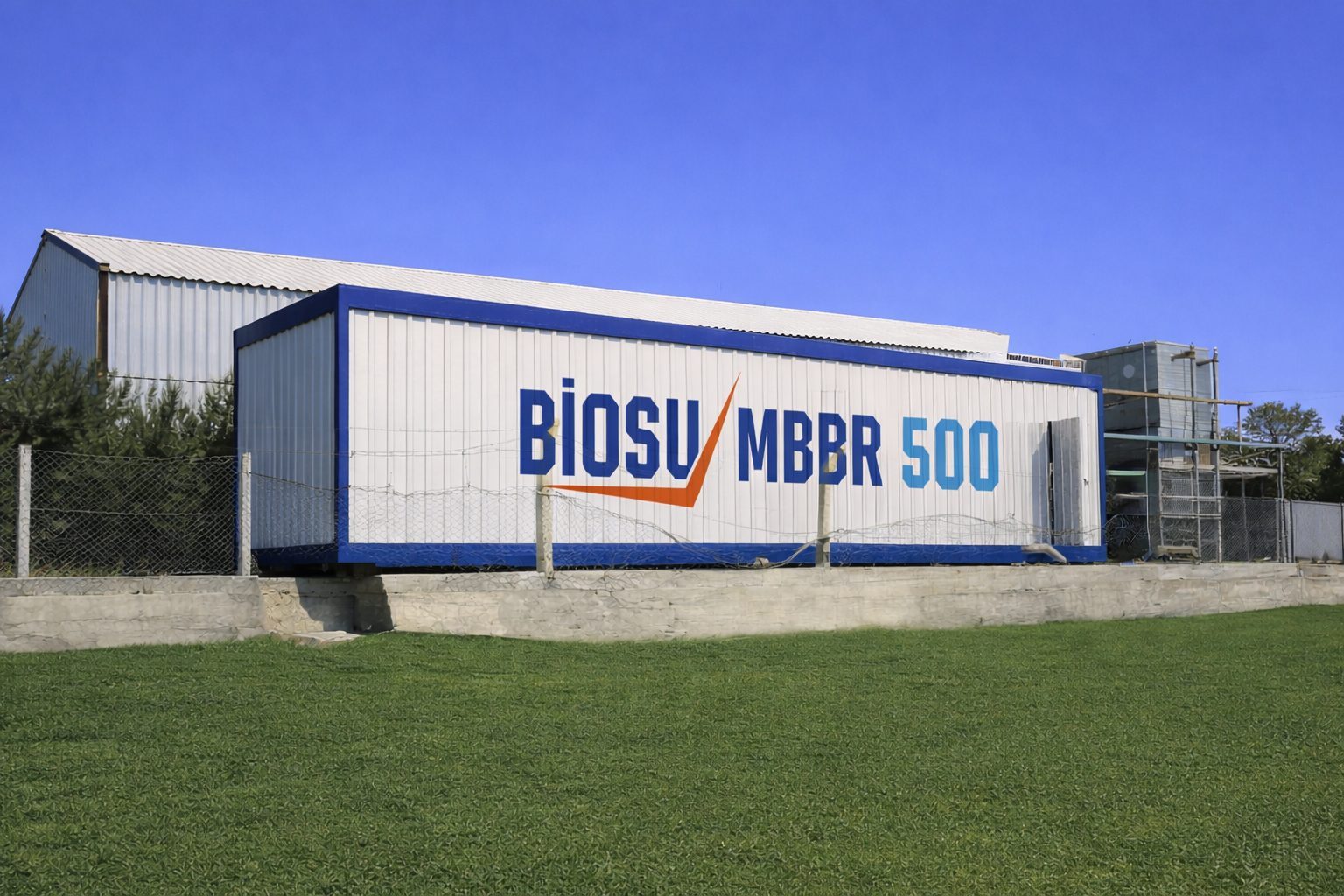
BİOSU MBBR
Most compactMoving bed biofilm reactor. High biomass in a small volume gives the smallest body in the family. Tolerant of shock loads, and it can be retrofitted into an existing plant.
- •50 – 5,000 population equivalent
- •Tolerant of shock loads
- •40% smaller volume
- •Can be added to an existing system
SBR, MBR, MBBR — Side by Side
The three configurations against the same criteria. The selection logic is in the next section.
| Criterion | SBR | MBR | MBBR |
|---|---|---|---|
| Capacity (population equivalent) | 50 – 5,000 | 100 – 10,000 | 50 – 5,000 |
| Effluent quality | Discharge standard | Reuse quality | Discharge standard |
| Capital cost | Economical | Medium–high | Medium |
| Footprint | Standard | Compact | Most compact |
| Shock-load tolerance | Medium | Good | Very good |
| Nutrient removal | Included | Included | Optional |
Which BİOSU Model Should You Choose?
Three questions get you to the right series. The final selection is always made together with a wastewater analysis and the discharge target.
Will you reuse the treated water?
Irrigation, toilet flushing, process water, boiler feed — if the answer is yes, the model is MBR. Its effluent quality is independent of influent fluctuation.
Is your space tight, does your load spike seasonally, or do you want to upgrade an existing tank?
Then MBBR: the biofilm is far less affected by a sudden change in load, and the reactor volume is the smallest in the family.
Is the goal simply to meet the discharge limit at the lowest investment, with nitrogen and phosphorus removal in one tank?
Then SBR: cycle times are adjusted to the flow, and nutrient removal is part of the cycle.
Series Capacities
| Series | Population equivalent | Design flow (m³/day) | Effluent target | When it is chosen |
|---|---|---|---|---|
| BİOSU SBR Sequencing batch reactor | 50 – 5,000 | 5 – 500 | Discharge standard | Lowest capital cost, batch or fluctuating flow |
| BİOSU MBBR Moving bed biofilm | 50 – 5,000 | 20 – 2,000 | Discharge standard | Smallest footprint, shock loads, retrofit into an existing tank |
| BİOSU MBR Membrane bioreactor | 100 – 10,000 | 10 – 1,000 | Reuse quality | Water reuse, strict discharge limits, restricted space |
Flows above these ranges are met with modular units operating in parallel, or with a project-specific design.
Typical Removal Efficiencies
Series-level values. Model-level detail is on the SBR, MBR and MBBR pages.
| Parameter | Typical removal | Effluent target |
|---|---|---|
| BOD₅ | 90 – 98% | Turkish WPCR Table 21 (domestic) or the relevant sector table |
| COD | 85 – 98% | Turkish WPCR Table 21 (domestic) or the relevant sector table |
| TSS | 95 – 99%+ | Lowest with the MBR membrane barrier |
| Total nitrogen | 80 – 90% (SBR / MBR) | Nitrification and denitrification included |
| Bacteria / viruses | 3–6 log with MBR | Membrane barrier; UV optional |
These figures are typical performance ranges for the series and depend on the influent characteristics; they are not a contractual guarantee on their own. The guaranteed values for your plant are written into the quotation.
Common to Every BİOSU Model
Finished in the factory
All mechanical, electrical and automation assembly is completed in the factory. The unit arrives on site tested.
Place it, connect it, run it
Placement takes 2–5 days for container versions; conventional site assembly takes 5–20 days.
Unattended operation
PLC control, remote monitoring and automatic operation. Running the plant without a permanent operator is possible.
Certified production
Manufactured in a factory certified to ISO 9001, ISO 14001 and ISO 45001.
Warranty
Two years on mechanical equipment, five years on stainless and structural parts. MBR membrane modules carry the manufacturer’s warranty.
Support
Telephone support during office hours and scheduled maintenance plans; a 24/7 emergency line under an O&M contract.
Scope of Supply: What Is Included, What Is Not
Turnkey means the scope is written down. The list below is the frame of a standard BİOSU delivery; the final scope is fixed in the quotation for each project.
In GESU’s scope
- Process selection, mass balance and equipment sizing from the wastewater analysis, flow profile and discharge target
- Body manufacture in GESU’s own factory in Bursa
- Blower, diffuser line and — depending on the technology — mixer, decanter, carrier media or membrane module
- Transfer, recirculation and sludge pumps; chemical dosing and disinfection where the project requires it
- PLC, HMI touch panel, frequency inverters, field instruments and remote monitoring
- Factory assembly and testing; site placement and connection of inlet, outlet and power
- System tests, performance verification (SAT), on-site operator training
- Layout drawing, P&ID, equipment list, operating manual and maintenance schedule
On the customer’s side
- Reinforced concrete plinth or prepared site platform
- Wastewater inlet line up to the unit, and the outlet / discharge line
- Site power supply and main panel connection of adequate cross-section
- Crane or forklift for unloading, and room to manoeuvre (unless stated otherwise in the quotation)
- Environmental permit, licence and discharge applications (GESU supports these with the technical file)
- Operating consumables: electricity, chemicals and disposal of the sludge produced
Any of these items can be taken into GESU’s scope on request; it is discussed at the quotation stage.
Transport, Installation and Commissioning
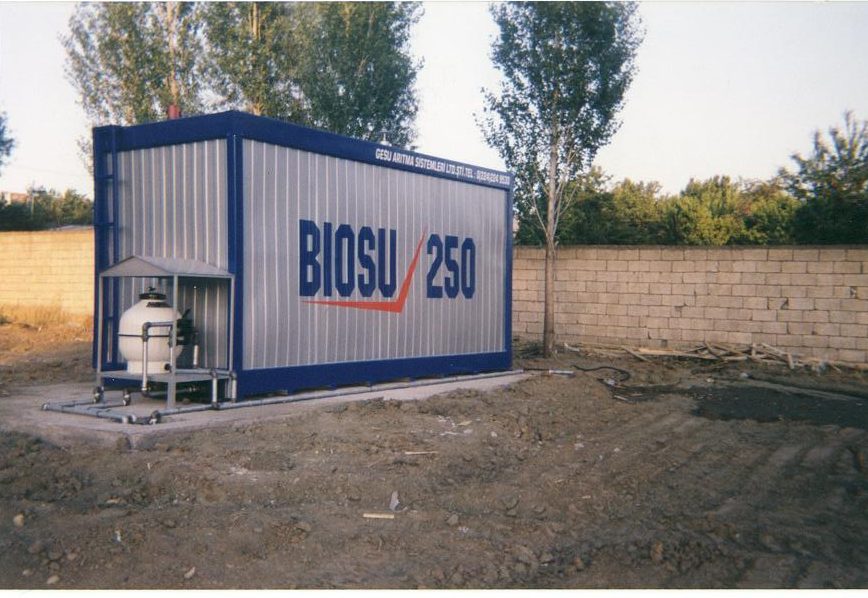
The unit is finished in the factory and arrives on site complete. The work done on site is to set it down, make three connections and start it.
How it arrives
- Container-type units ship in one piece, within road transport dimensions
- At larger capacities the unit is split into modular sections and joined on site
- It is lifted by crane and lowered onto the prepared plinth
- The shipping plan — number of pieces, shipping weight, transport dimensions and lifting points — is issued with the approved manufacturing drawings
The three site connections
- Wastewater inlet line
- Treated water outlet / discharge line
- Electrical supply
Connection diameters (DN) and the required supply rating are given in the project layout drawing and equipment list.
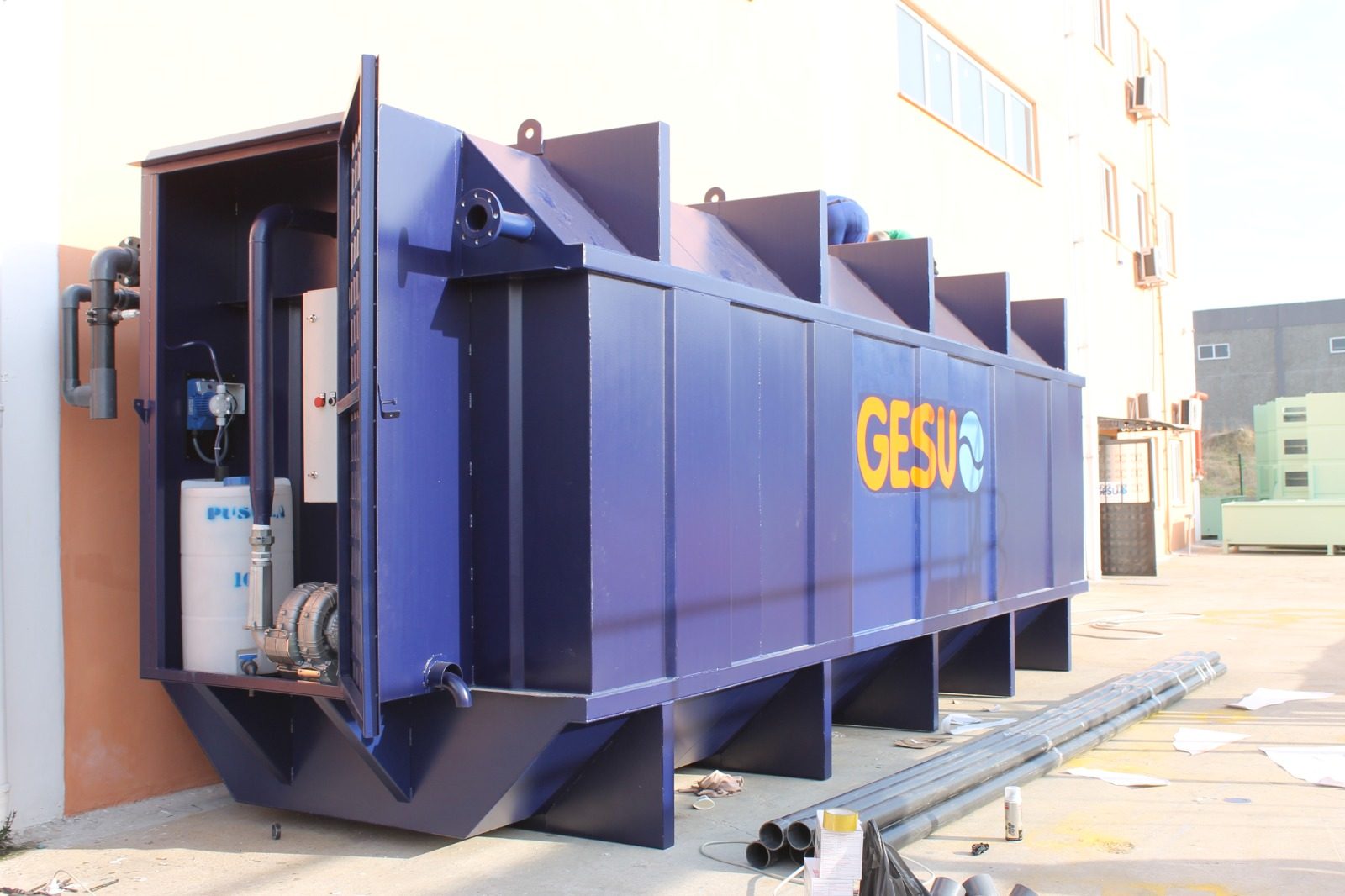
From Our Own Sites
Not stock imagery — our own manufacturing, our own sites.
What to Send Us for a BİOSU Quotation
To choose the right model we first need to know what kind of water it is and how it will be used. With the information below in hand we can usually respond with a technical proposal in one step.
- Population equivalent, or the daily flow in m³/day, to be treated
- Source of the wastewater: domestic, hotel or estate, slaughterhouse, dairy, food, camp, construction site
- Wastewater analysis if you have one: COD, BOD₅, TSS, oil and grease, TN, TP, pH
- Where the treated water goes: receiving body, sewer, irrigation or reuse
- How the flow is distributed through the day — morning and evening peaks, seasonal use
- Layout: buried, above ground or containerised; the space available
- Electricity and water infrastructure on site; whether a generator is present
- Operating preference: fully automatic without an operator, remote monitoring
Ask for the BİOSU Technical Data Sheet
Send us your flow, your population equivalent and your wastewater analysis if you have one. Our engineer will return the capacity, the layout dimensions (L×W×H), the installed power (kW) and the connection details for your project.
Request a Quote