
DAF System — Dissolved
Air Flotation
The most effective physical-chemical treatment technology for removing oil & grease, TSS and emulsified pollutants. From GESU, a manufacturer that builds DAF units in its own factory: how it works, what it solves in which industry, what determines its price — everything you are looking for about DAF, on one page.
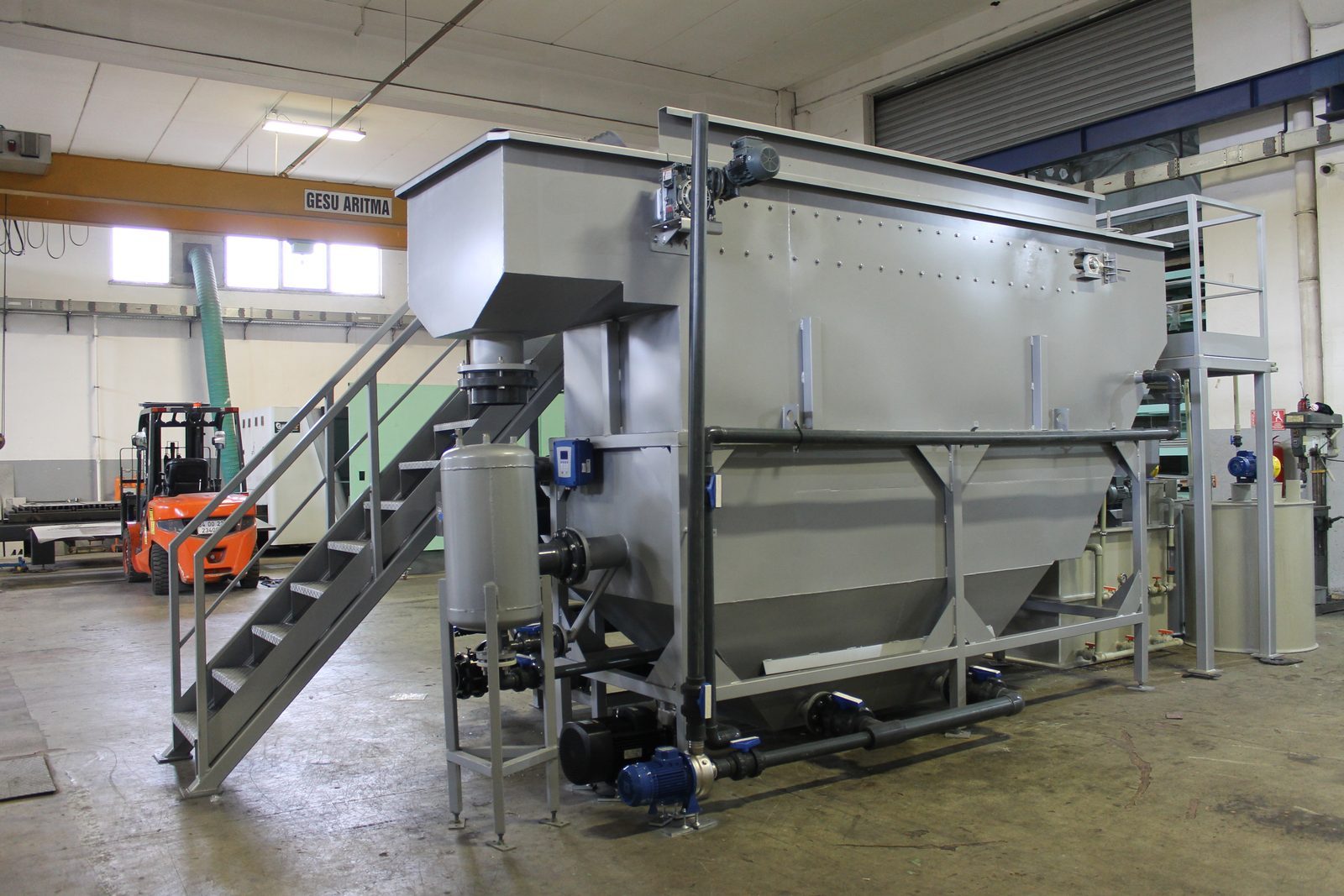
Removal efficiencies are typical ranges published in the literature; actual performance depends on wastewater characteristics and chemical conditioning, and is verified by jar testing.
Our DAF Unit in Operation
The IBRIK DAF unit: body design, pipe flocculator, chain skimmer and floated sludge on site — in 60 seconds.
What Is a DAF System?
DAF (Dissolved Air Flotation) is a physical-chemical treatment process in which water is saturated with air under pressure and then released to atmospheric pressure, generating micro air bubbles that attach to the oil & grease, total suspended solids (TSS) and flocculated pollutants in the wastewater and carry them to the surface. It is the opposite of sedimentation: the pollutant does not sink to the bottom — it is floated and separated.
Oil droplets, fibers, paint and colloidal particles that take hours to settle by gravity — or never settle at all — rise to the surface within minutes in a DAF tank. That is why DAF is the standard solution for industries generating oily wastewater with light particles: food, slaughterhouses, dairy, textile, paper, metal and petrochemicals.
DAF is not a "magic box" on its own; it cannot remove dissolved pollutants (dissolved COD, nitrogen, phosphorus). Configured correctly, however, it is the most critical link in the chain — protecting the downstream biological and membrane processes and relieving the load on the entire plant. At GESU we engineer DAF both as a standalone unit and as part of a complete treatment line, and we build it in our own factory in Bursa.
How Does DAF Work? Step by Step
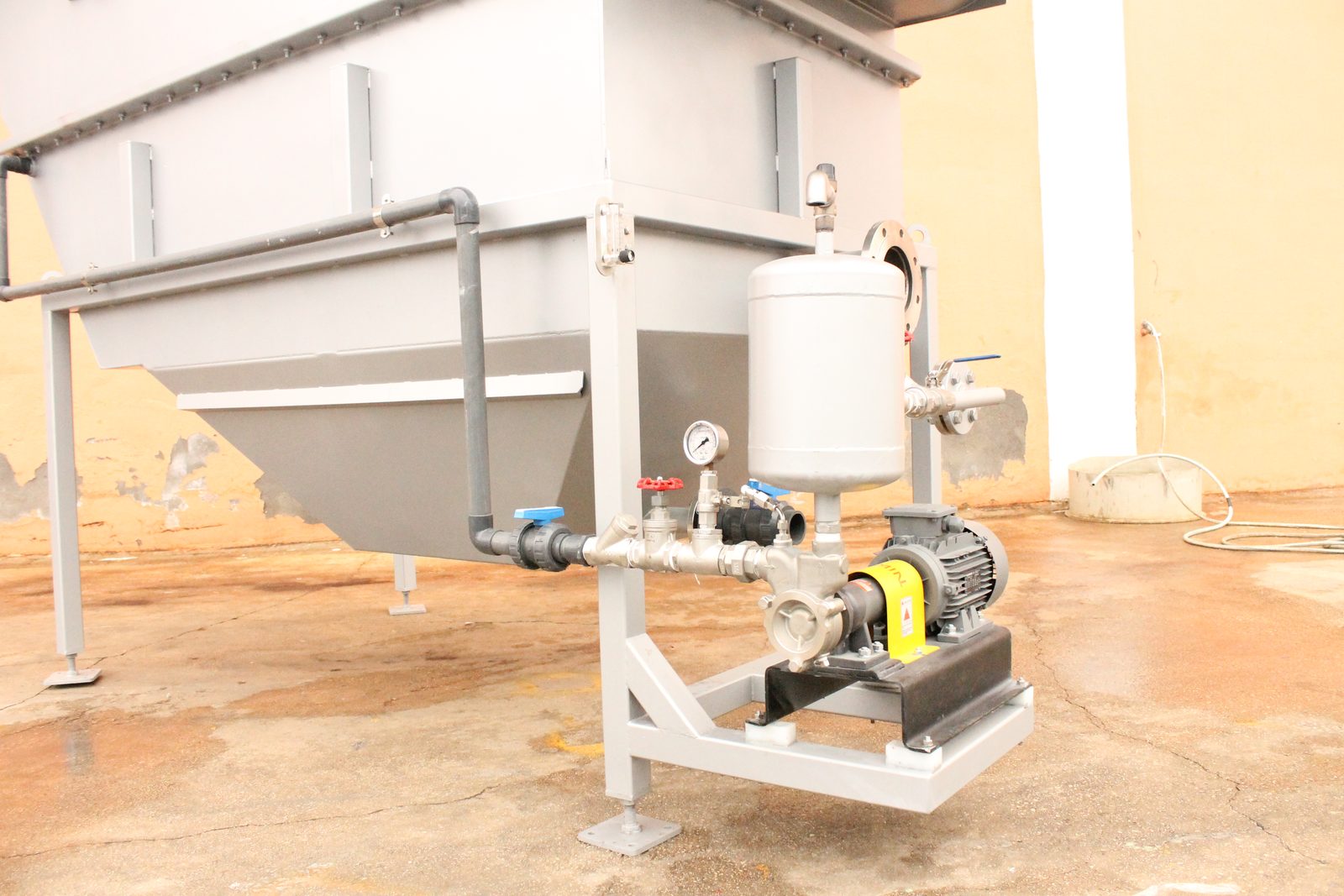
Inside a DAF unit, water passes through five basic stages. The heart of the system is the air-dissolution line — in GESU's standard design this is handled by a microbubble (dissolved-air) pump and a compact saturation tank.
Chemical Conditioning
Coagulant (e.g. iron/aluminum salts) neutralizes surface charges, while polymer binds small particles into large flocs that bubbles can capture. The right chemical and dosage are determined by jar testing.
Dissolving Air in Water
Part of the treated effluent (recycle) is drawn into a microbubble pump; it aspirates air directly and dissolves it under pressure, balancing it in a compact saturation tank. No separate air compressor or large pressure vessel is needed. As pressure rises, more air dissolves (Henry's Law).
Micro-Bubble Formation
When the saturated water passes through the release valve/nozzle at the flotation tank inlet and drops to atmospheric pressure, the dissolved air is released as micro-bubbles. Compared with a classic system, the microbubble pump produces a finer (typical 10-40 micron) and more uniform bubble cloud — a milky-white cloud, barely visible to the eye.
Flotation
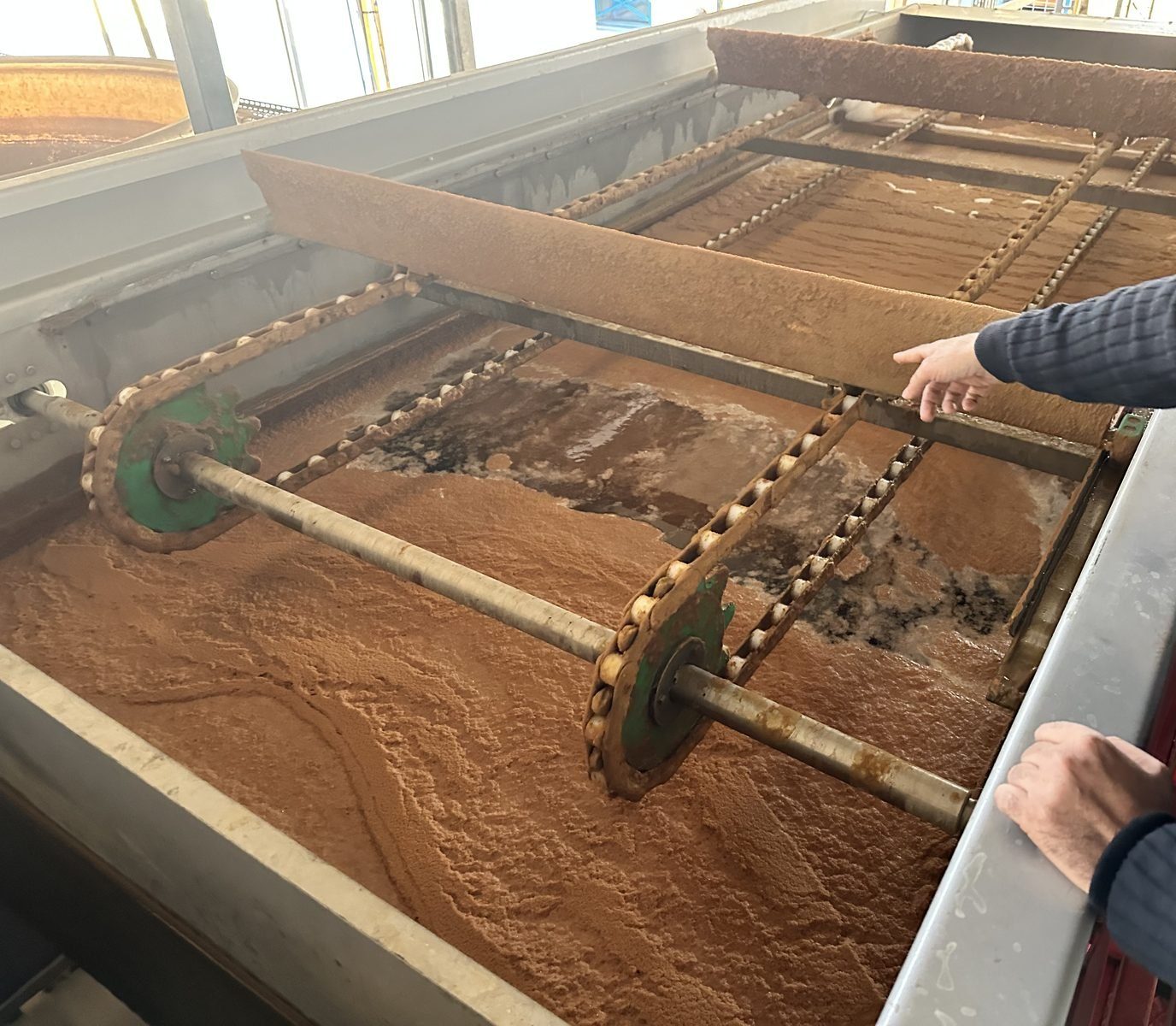
The micro-bubbles attach to the flocs, and the density of the floc-bubble agglomerate becomes lower than that of water; the pollutants rise to the surface within minutes, forming a sludge blanket (float).
Skimming & Clarified Water
A mechanical surface skimmer sweeps the flotation sludge into the sludge hopper; the small amount of heavy solids that settle at the bottom is drawn off via the bottom valve. The clarified water flows over the weir to the next treatment step or to discharge.
DAF: One Machine, Five Jobs
DAF is not merely a "pre-biological oil removal" unit. Whatever the industry, there is work for a DAF in at least one point of a treatment plant. Here are five different duty points:
Oil & Grease and TSS Removal Ahead of Biological Treatment
The classic application: it captures the heavy oil and solids load before it reaches biological treatment. It keeps the aeration basin free of foam, the membranes free of fouling — and the operator free of trouble.
Effluent Polishing After Biological Treatment
By capturing light, non-settling biological flocs and residual TSS, it keeps a safe margin to the discharge limit — acting as the "last line of defense" before an inspection.
Sludge Thickening by Flotation
Waste biological sludge thickens poorly by gravity; flotation achieves a higher dry solids content. The load on the dewatering equipment and the polymer consumption both decrease.
Pre-Filtration Ahead of MBR / RO
In water reuse lines, membrane life is determined by how clean the water arriving upstream is. In the Namet Gümüşova line we are currently building, the DAF takes on exactly this protective duty.
Process Water / Stormwater Treatment
In in-process applications such as fiber recovery in paper mills or oil-solids separation in site surface runoff, DAF creates value outside the wastewater treatment plant as well.
"Whatever the industry, there is work for a DAF somewhere in the plant."
Not sure where a DAF fits in your plant? Ask us — let's look at your flow diagram together.
What Does It Solve in Which Industry?
The target pollutant and expected performance of a DAF vary by industry. The figures below are typical ranges published in the literature; the exact figures for your wastewater are determined by jar testing and characterization.
| Industry | The Problem DAF Solves | Typical Inlet | Typical DAF Outlet |
|---|---|---|---|
| Slaughterhouse / Integrated Meat industry page → | Oil & grease + TSS + blood-derived organic load; mandatory pre-treatment before biological | Oil & grease typical 100-1,000 mg/L TSS typical 800-3,000 mg/L |
Oil & grease typical 20-70 mg/L TSS typical 100-300 mg/L |
| Dairy & Milk Products industry page → | Milk fat (emulsified), cheese whey losses, CIP washing solids | Oil & grease typical 100-500 mg/L TSS typical 300-1,500 mg/L |
Oil & grease typical 10-50 mg/L TSS typical 50-200 mg/L |
| Textile industry page → | Fibers + light flocs that cannot be settled by coagulation; color pre-treatment (with chemical conditioning) | TSS typical 100-500 mg/L + intense color |
TSS typical 20-80 mg/L Color: significant partial removal (chemistry-dependent) |
| Metalworking industry page → | Oily emulsions (cutting fluid, coolant oil) — separation of free oil after chemical emulsion breaking | Oil & grease typical 100-2,000 mg/L (emulsion) | Oil & grease typical 10-50 mg/L (emulsion breaking + DAF) |
| Pulp & Paper industry page → | Fiber and filler losses; recovering fiber and returning it to the process | TSS/fiber typical 500-2,500 mg/L | TSS typical 50-200 mg/L + recovered fiber |
| Petrochemical / Refinery industry page → | Free + emulsified oil remaining after the API/CPI separator; protection of the biological unit | Oil typical 50-500 mg/L (after separator) | Oil typical 10-30 mg/L |
All figures in the table are typical ranges from general engineering literature; plant-specific guaranteed values are only given in a quotation, after sample analysis and jar testing.
DAF or Sedimentation?
Both processes perform solid-liquid separation; the difference is which way the particle "wants" to go. A general engineering comparison:
| Criterion | DAF (Flotation) | Conventional Sedimentation |
|---|---|---|
| Surface loading rate (hydraulic) | Typical 4-10 m³/m²·h — small tank, big job | Typical 0.5-1.5 m³/m²·h — a large basin is required |
| Retention time | Typical 10-30 minutes | Typical 2-4 hours |
| Footprint | Compact; can be delivered skid-mounted | Large; usually a reinforced concrete basin |
| Sludge dry solids | Flotation sludge typical 2-4% DS — you haul less water | Typical 0.5-1.5% DS — thickening demand increases |
| Best-suited pollutants | Oil & grease, fibers, paint, colloids, light flocs | Grit, heavy inorganic solids, dense flocs |
| Energy consumption | Moderate (single microbubble pump at GESU; pump + compressor in a classic design) | Low (scraper drive) |
| Start-up speed | Stabilizes within minutes | Hydraulic equilibrium takes longer |
The short rule: if the particle is lighter than water or oily, choose DAF; if it is clearly heavier than water, choose sedimentation. In borderline cases the decision is made by weighing footprint, energy, sludge management and investment budget together.
Read the Detailed GuideA GESU DAF for Every Scale
GESU DAF units are engineered around three series. Capacity ranges and model details are finalized at the quotation stage, based on your wastewater characteristics.
Compact Series
Skid-mounted, plug-and-play DAF units for small flows. Shipped factory-tested; commissioned on site with just piping and power connections. Ideal for plants with limited space and for pilot applications.
- Skid-mounted, minimal site work
- Fast delivery and commissioning
- Integrated chemical dosing option
Capacity range is finalized at the quotation stage.
Standard Series
The workhorse of mid-size industrial plants. Lamella (compact, surface-enhanced) or classic rectangular body; stainless steel 304/316L fabrication. Typical GESU installations in food, textile, metal and paper plants belong to this series.
- Lamella module option for a smaller footprint
- PLC control + automatic dosing
- Project-specific sizing
Capacity range is finalized at the quotation stage.
High Capacity Series
Engineered DAF lines for large industrial and integrated plants and centralized industrial-zone treatment facilities. Designed with multiple units operating in parallel, redundant pressurization systems and SCADA integration.
- Parallel unit / redundancy design
- SCADA / plant automation integration
- Complete line engineering (equalization → DAF → downstream)
Capacity range is finalized at the quotation stage.
Why a GESU DAF?
Many companies sell DAF units; few manufacture them in their own factory and verify them in their own laboratory. Our difference in four points:
Stainless Steel Fabrication in Our Own Factory
The DAF body, lamella modules and skimmer system are fabricated from 304/316L stainless steel in our factory in Bursa. No middlemen — quality control stays with us. See our factory →
Verification in Our Jar-Test Laboratory
Before we quote, we run a jar test on your wastewater sample in our laboratory. Chemical type, dosage and expected performance are determined with your water — not by assumption.
Fast Delivery
Because manufacturing happens in our own facility, we set the delivery schedule by our own workshop — not by an importer's calendar. Typical factory fabrication 30-60 days, site installation 5-15 days.
2-Year Warranty + Service
2 years on mechanical equipment (from commissioning; capped at 30 months from delivery) and 5 years on the stainless steel body. Afterwards, we stay at your side with periodic maintenance, spare parts and chemical optimization support.
We Put Our DAF Units on the Exhibition Stage
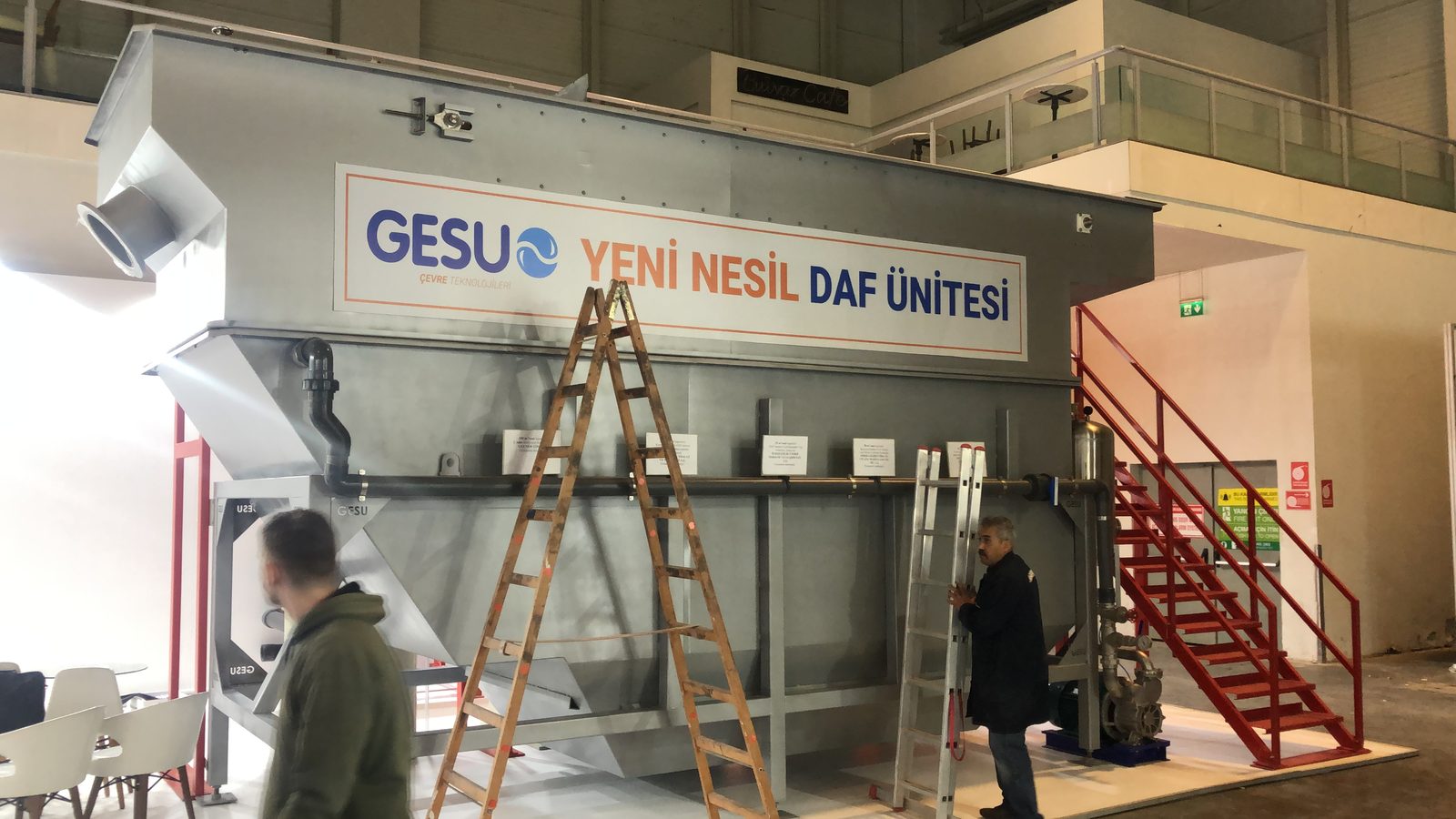
GESU has repeatedly exhibited its DAF systems at IFAT Eurasia (Istanbul), the region's leading water & environment exhibition — bringing our full-size DAF tanks onto the exhibition floor. A manufacturer that trusts its product does not hesitate to place it next to its competitors'.
Numerous DAF Installations — the Most Prominent Right Now: Namet Gümüşova
GESU has a large number of DAF installations operating in the field. One of the most visible examples is Namet Gümüşova, one of the world's leading integrated meat facilities: in the treatment and water reuse line currently being built as a DAF → Kubota flat-sheet MBR → RO chain, the GESU DAF is the first link — taking on the oil & grease and TSS load, protecting the membrane systems and clearing the way for water that will be reclaimed as boiler feed and cooling water once the plant is commissioned at the end of 2026.
Explore This Project and Other ReferencesWhat Determines the Price of a DAF?
The only honest answer to "How much does a DAF cost?" is: it depends on your wastewater. Anyone quoting a number on the internet is pricing an average — not your plant. What actually determines the price:
Flow Rate (m³/h) and Peak Factor
The main sizing parameter. The peak flow matters as much as the average: if a plant whose flow triples during end-of-shift washdowns has its DAF sized on the average, it will overflow. It is considered together with the equalization tank.
Oil and Solids Load
At the same flow rate, as the oil & grease and TSS concentrations rise, the flotation area, skimmer capacity, sludge hopper and chemical system all grow. The load can be even more decisive than the flow.
Body Material
Stainless steel 304, 316L for chloride-rich/aggressive waters, or carbon steel + epoxy for budget-driven projects. The material choice determines both the initial investment and what the unit looks like 10 years later. The GESU standard is stainless steel fabrication.
Level of Automation
A wide spectrum — from manual valves and a switchgear panel to PLC, touchscreen, automatic dosing and SCADA integration. Automation raises the initial cost but reduces operator error and chemical waste.
Chemical Preparation & Dosing Scope
Are coagulant dosing pumps, a polymer make-up unit, a pH adjustment system and a flocculation tank included in the quotation? There is a serious scope difference between a "bare DAF" and a "DAF with a complete chemical package".
Options: Lamella, Redundancy, Installation
A lamella module (more capacity in less space), a standby pressurization pump, site installation and commissioning services, operator training — the price changes as items enter or leave the scope.
DAF Operating Tips
A plant that operates a good DAF badly gets worse results than one that operates a poor DAF well. Three critical operating parameters (at a general-knowledge level):
Saturation Pressure
The typical operating range is 4-6 bar. If the pressure drops, less air dissolves, the bubble cloud weakens and rise to the surface slows down; unnecessarily high pressure, on the other hand, wastes energy. In GESU's microbubble-pump design the saturation is achieved in a single pump; check the pressure gauge daily and maintain the compact saturation tank's air-water balance per the manufacturer's instructions.
Recycle Ratio
The pressurized stream is typically 15-50% of the effluent; the ratio is raised as the pollutant load increases. The air-to-solids (A/S) ratio — typically 0.01-0.1 kg air/kg solids in the literature — is the mathematical heart of flotation. If the effluent turns turbid, question the recycle and the A/S balance first.
Polymer Dosage
Too little polymer forms no flocs; too much both wastes money and can disrupt floc structure — even leaving residue in the effluent. The right dosage is found by jar testing and re-verified whenever the wastewater character changes (production changes, seasons). The GESU laboratory supports this optimization.
These topics are general operating knowledge; for unit-specific values, rely on your O&M manual and the GESU service team.
Which DAF Is Right for Me?
Enter your flow rate, industry and pollutant profile for preliminary guidance — or talk directly to our engineers. Final sizing is always based on wastewater analysis and jar testing.
Technical Specifications
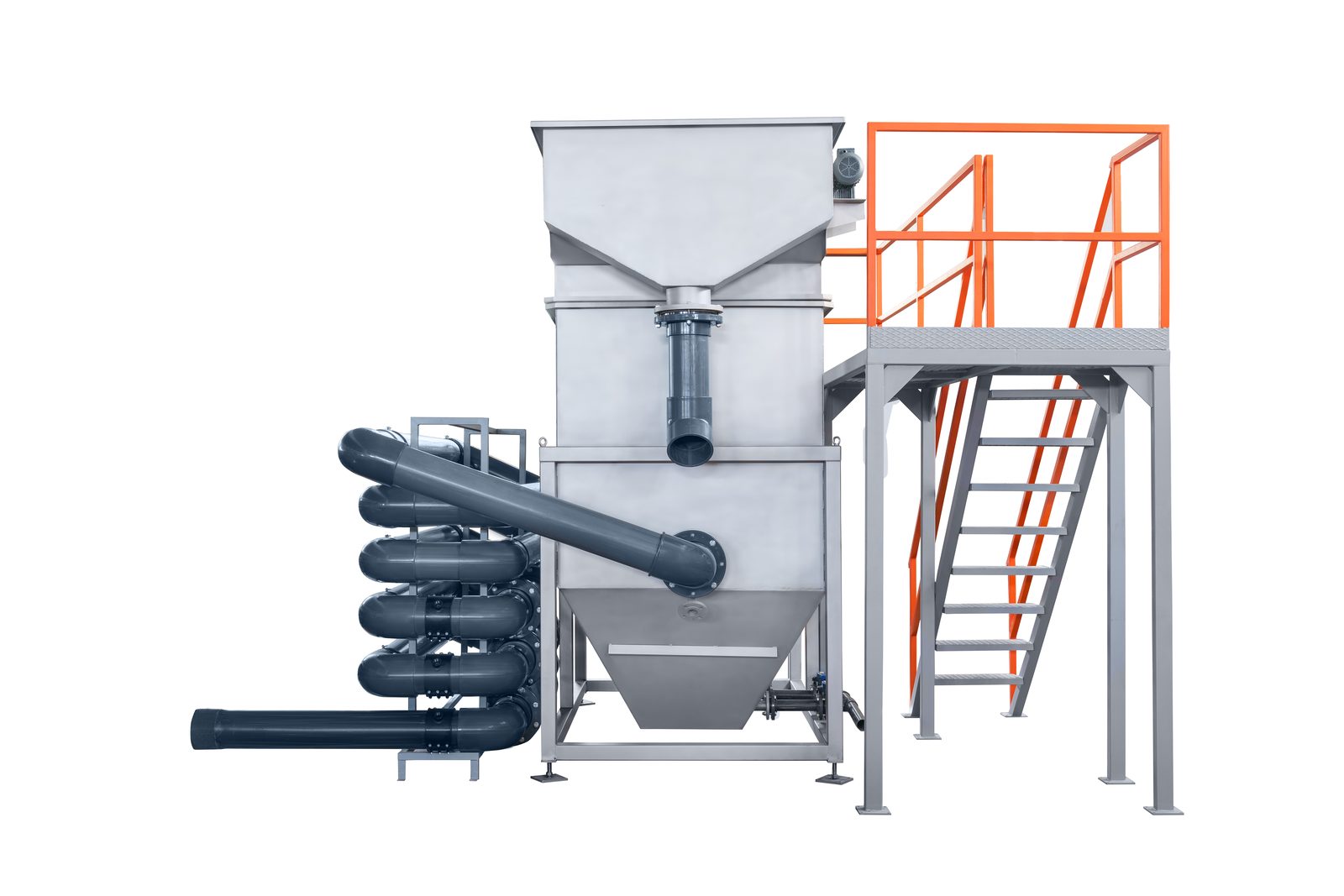
A Little DAF Glossary
The key terms you will come across when reading quotations and specifications:
Float (Flotation Sludge)
The pollutant layer that accumulates on the surface and is removed by the skimmer. Typically contains a higher dry solids content than sedimentation sludge.
Microbubble Pump
A special pump that aspirates air directly and dissolves it in water. GESU's standard design uses it instead of a separate compressor + large saturation vessel, giving finer bubbles and a compact system.
Saturation Tank
The vessel where air is dissolved and balanced. At GESU it is a compact tank fed by the microbubble pump; in a classic design it is a large pressure vessel.
A/S Ratio (Air/Solids)
The ratio of the air mass supplied to the solids mass to be removed; typically 0.01-0.1 in the literature. The fundamental sizing parameter.
Recycle (Recirculation)
The treated water drawn into the microbubble pump and saturated with air; typically 15-50% of the effluent.
Lamella Module
A pack of inclined plates; it increases the effective separation surface, allowing the same job to be done in a smaller tank.
Jar Test
The laboratory trial that determines the coagulant/polymer type, dosage and pH. The scientific foundation of the quotation.
Surface Loading Rate
The water passing per unit flotation area per hour (m³/m²·h); typically 4-10 for DAF, 0.5-1.5 for sedimentation.
Skimmer
The chain- or paddle-driven mechanical device that sweeps the float on the surface into the sludge hopper.
Jump to the section you need
Everything on this page, in three shortcuts:
What Is DAF? Technology Guide
The scientific basis of dissolved air flotation, its working principle and application areas.
ReadDAF or Sedimentation?
Which one, in which case? A decision guide covering surface loading, footprint, sludge and cost.
ReadThe 7 Factors That Determine DAF Price
What you should know before requesting a quote: how to read the scope and compare offers.
ReadFrom Our Factory, Sites and Exhibitions
No stock photos — our own DAF units: in fabrication, on site, in operation and on the exhibition stage.
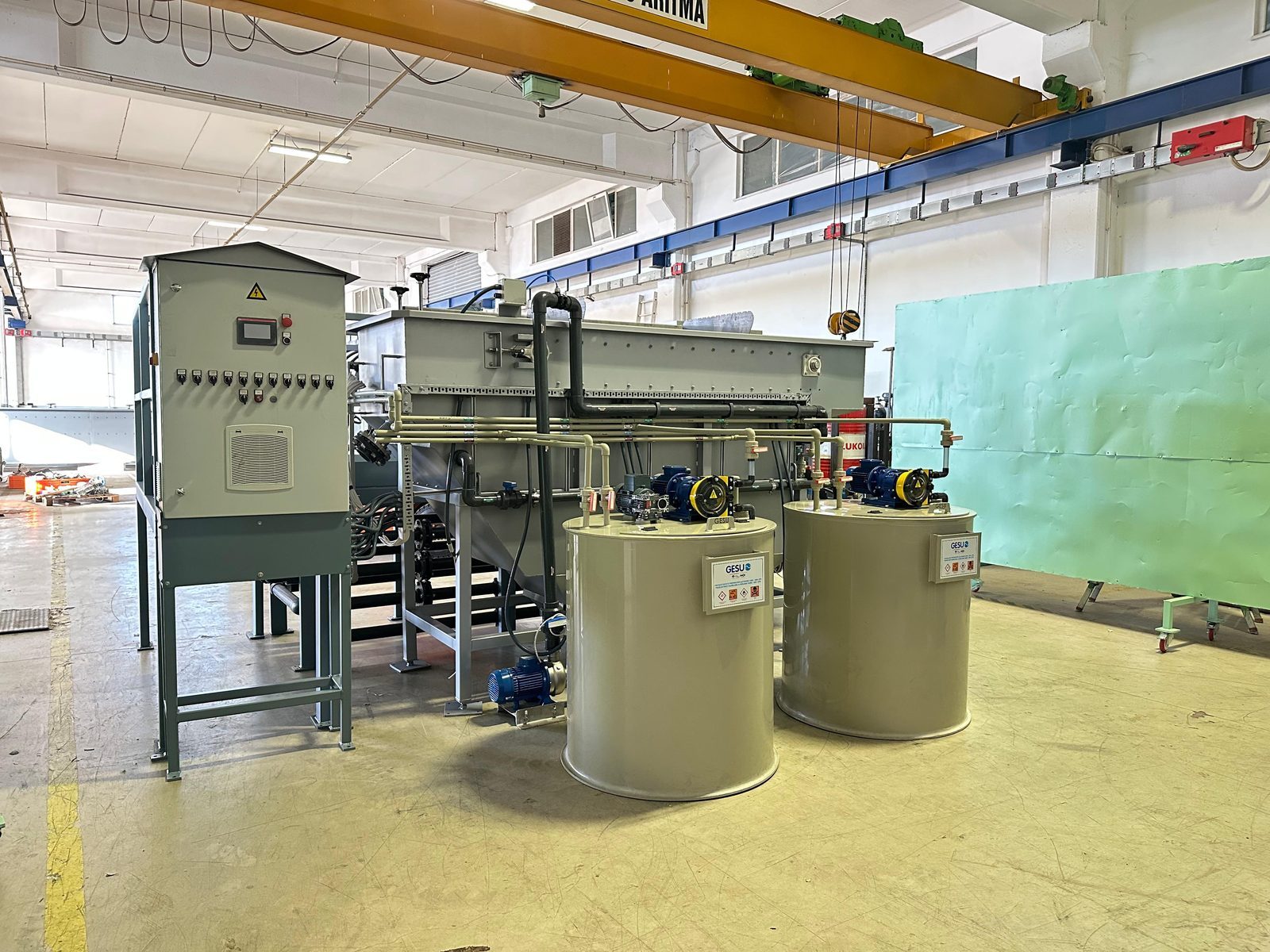
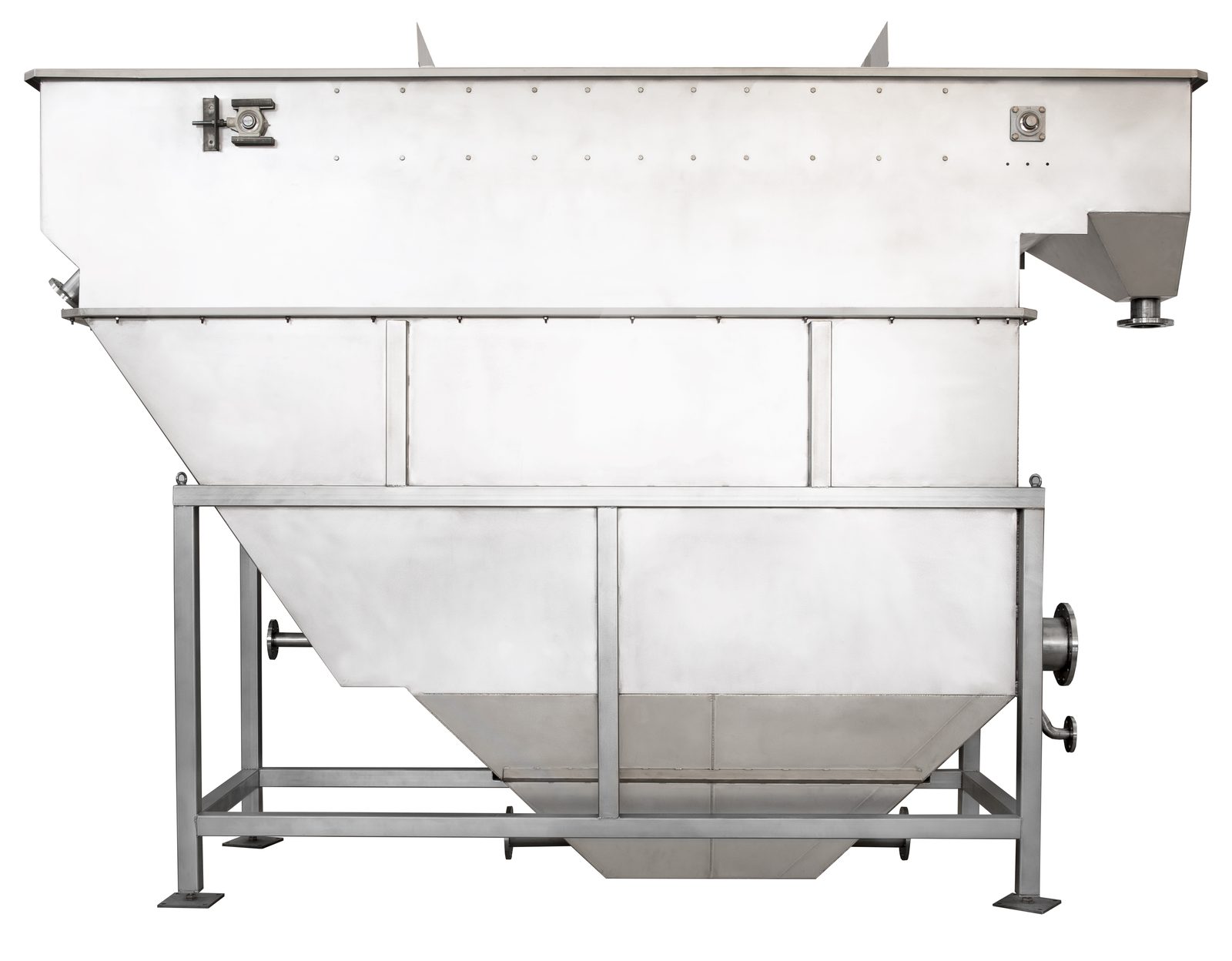
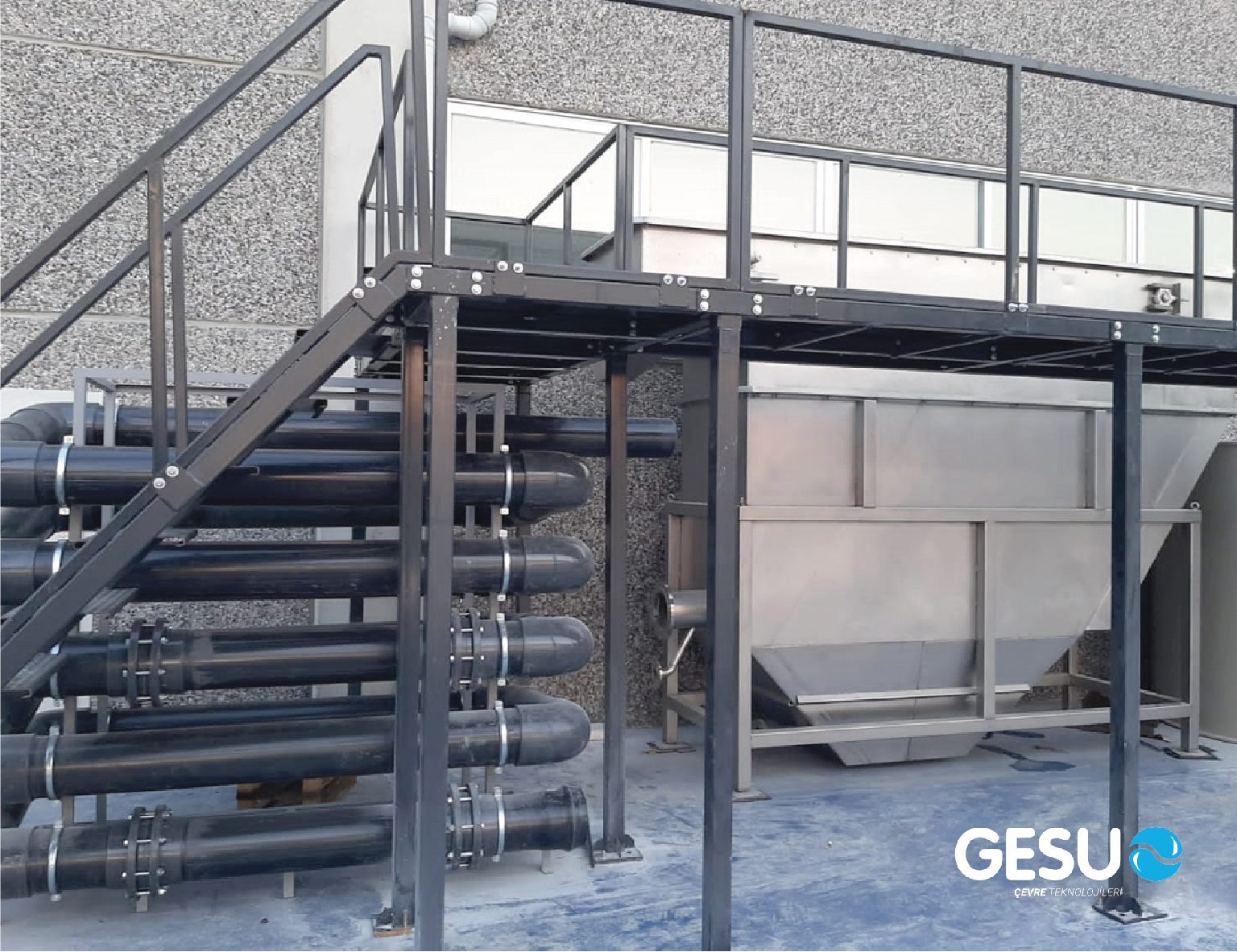
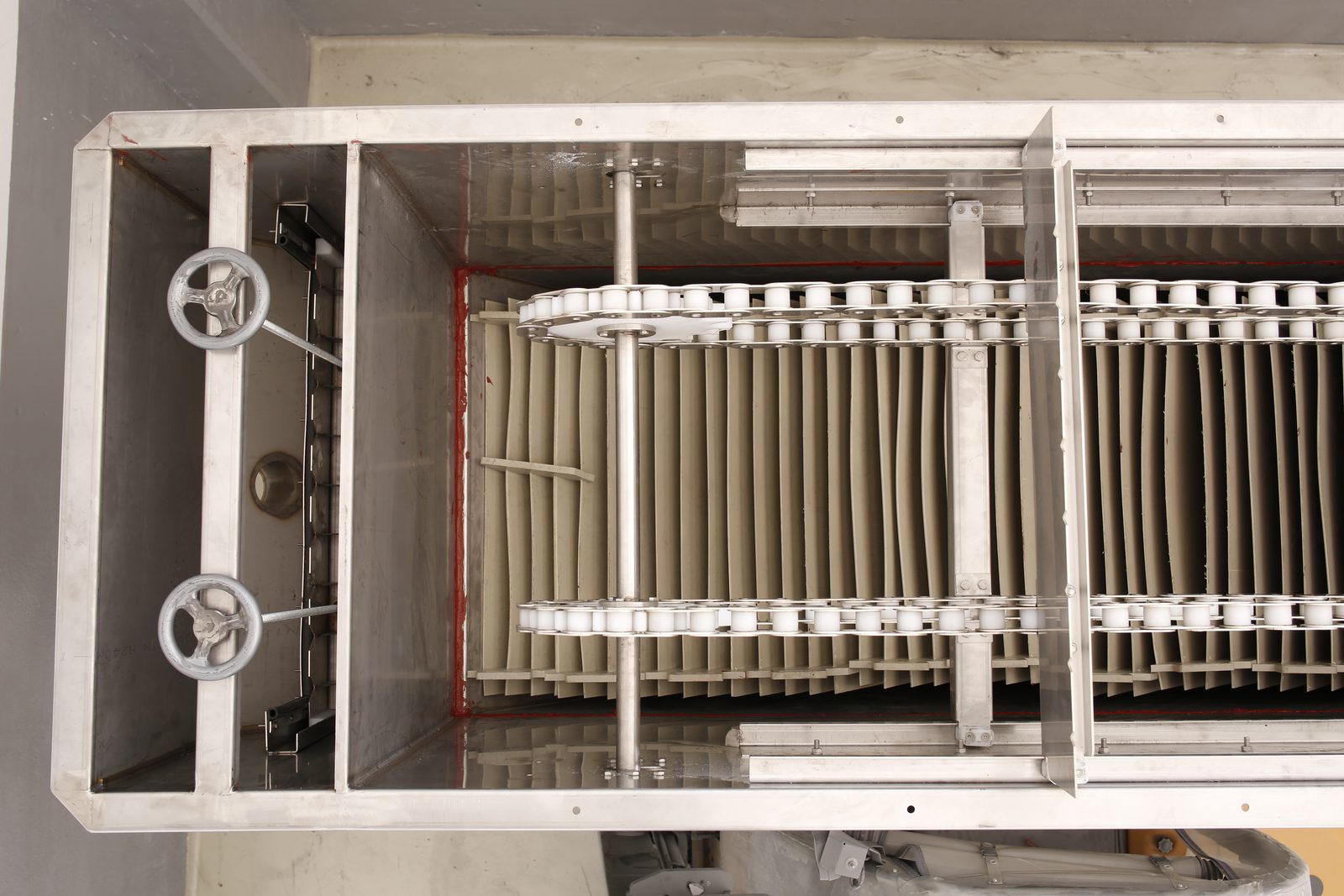
Exhibitions & Events
At IFAT Eurasia 2023 (27-29 April, TUYAP — Istanbul) our "New Generation DAF Unit" was the star of our stand.
Let's Talk About Your Project
With 30 years of experience, let's determine the most suitable solution for your project together.
Frequently Asked Questions About DAF
We have gathered the questions everyone looking for a DAF asks, in one place. If you can't find the answer you're looking for, get in touch with us — let our engineers answer.
What is a DAF system and what does it do?
DAF (Dissolved Air Flotation) is a physical-chemical treatment process in which water saturated with air under pressure is released to atmospheric pressure, generating micro-bubbles that carry oil & grease, total suspended solids (TSS) and flocculated pollutants in the wastewater to the surface, where they are separated. It is far faster and more effective than sedimentation, especially for oily industrial wastewater containing light particles.
How does DAF work?
The wastewater is first conditioned with coagulant and polymer. Part of the treated effluent (recycle) is drawn into a microbubble (dissolved-air) pump; the pump aspirates air directly and dissolves it in the water under pressure (typical 4-6 bar), balancing it in a compact saturation tank — no separate air compressor or large pressure vessel is required. When this water is released to atmospheric pressure at the flotation tank inlet, fine micro-bubbles with a typical diameter of 10-40 microns are formed; the bubbles attach to the flocs and carry them to the surface. The sludge layer on the surface is removed by a mechanical skimmer, and the clarified water is discharged from the bottom section. For a detailed walkthrough, see the step-by-step section.
Which is more suitable — DAF or sedimentation?
DAF is more suitable for wastewater containing oil & grease, fibers, paint and light/colloidal particles; sedimentation is more suitable for grit, heavy inorganic solids and high-density particles. DAF typically operates at a much higher surface loading rate than sedimentation, occupies less space and produces a drier flotation sludge. The right choice is made through wastewater characterization and jar testing. Detailed decision guide: DAF or Sedimentation?
What determines the price of a DAF system?
The price of a DAF system is determined by the flow rate (m³/h), the oil & grease and TSS load, the body material (stainless steel 304/316L or carbon steel), the saturation system design, the level of automation (manual, PLC, SCADA), the scope of the chemical preparation and dosing units, and the scope of installation and commissioning. For an accurate price, a quotation should be obtained based on wastewater analysis and jar test results. More detail: the 7 factors that determine DAF price.
Which pollutants does DAF remove?
DAF removes oil & grease, total suspended solids (TSS), fibers, paint and colloidal particles. Typical removal efficiencies published in the literature: oil & grease 90-95%, TSS 85-95%, COD 40-60% (depending on the particulate COD fraction). For dissolved pollutants (dissolved COD, nitrogen, phosphorus), biological or advanced treatment is required after DAF.
Which industries is DAF suitable for?
Food (slaughterhouses, integrated meat plants, dairy, vegetable oil, fish), beverage, textile, paper (fiber recovery), metalworking (oily emulsions), petrochemical-refinery, automotive (paint shops) and centralized industrial-zone treatment plants — DAF is effective in any wastewater containing oil & grease and suspended solids. For inlet-outlet ranges specific to your industry, see the industry table.
What capacities are GESU DAF units available in?
GESU DAF units are available as standard models in the 1-300 m³/h hydraulic capacity range. Typical flow rates: 5, 10, 25, 50, 100, 200 m³/h. Lamella (compact) and classic (rectangular) models are available. Units are sized per project within the Compact, Standard and High Capacity series structure.
Why is a jar test required before DAF?
A jar test determines the most suitable coagulant/polymer type, dosage and pH range for the wastewater under laboratory conditions. Before quoting, GESU performs a jar test in its own laboratory to verify DAF sizing and the projected chemical consumption on a real wastewater sample — so there are no surprises on site.
How long does DAF installation take?
Factory fabrication takes 30-60 days and site installation 5-15 days. Skid-mounted (compact) DAF units are commissioned faster. Because GESU manufactures in its own factory in Bursa, it controls its own delivery schedule.
What is the DAF warranty period, and do you provide service?
GESU DAF units carry a 2-year warranty on mechanical equipment (from commissioning, capped at 30 months from delivery) and a 5-year warranty on the stainless steel body. The microbubble (dissolved-air) pump and, where fitted, the compressor are covered by their manufacturers' warranties. After the warranty period we provide periodic maintenance, spare parts, chemical optimization (jar testing) and 24/7 support; we recommend a field service contract to our industrial users.