
Municipal & Domestic Urban Wastewater Treatment
Domestic and municipal wastewater treatment plants delivering high-quality, compliant effluent. From 84 PE package solutions to large-scale urban plants of 100,000+ PE.
About Municipal Wastewater
Domestic and municipal wastewater is a mixture of water originating from residences, commercial establishments, institutions and settlement areas outside industrial zones, together with stormwater. This category of wastewater is dominated by pollutants in organic (BOD, COD), suspended solids (TSS), nitrogen and phosphorus forms.
The pollutants in municipal wastewater are predominantly organic (BOD, COD), suspended solids (TSS) and nitrogen and phosphorus forms. Advanced biological N&P removal is required for highly sensitive receiving environments (the Sea of Marmara, lakes, enclosed seas).
With SBR, conventional activated sludge, MBBR, MBR and BIOSU package treatment systems, GESU delivers turnkey projects of every scale — from 84 PE to 100,000+ PE.
Municipal Plant Classes by Capacity
- 1Class 1: 84-1,000 PE — package treatment is suitable
- 2Class 2: 1,000-10,000 PE — SBR/MBBR recommended
- 3Class 3: 10,000-100,000 PE — activated sludge with N&P removal
- 4Class 4: >100,000 PE — advanced biological + tertiary
- 5Class 5: Sensitive receiving environments — additional N, P limits
Typical Wastewater Characterization
Average pollution load of domestic wastewater and typical discharge limits.
| Parameter | Inlet (mg/L) | Discharge Limit | Notes |
|---|---|---|---|
| Flow (m³/day) | 200 - 50,000 | - | Depends on population |
| COD | 250 - 600 | 125 | Organic load |
| BOD₅ | 150 - 300 | 25 | Biological load |
| TSS | 200 - 400 | 35 | Total suspended solids |
| Total Nitrogen (TN) | 40 - 70 | 10-15 | For sensitive receiving waters |
| Total Phosphorus (TP) | 6 - 15 | 1-2 | For sensitive receiving waters |
| NH₄-N | 25 - 50 | 5 | Ammonium nitrogen |
| pH | 6.5 - 8.5 | 6 - 9 | - |
| Oil & Grease | 50 - 100 | 10 | Vegetable-animal |
The GESU Solution — Process Flow
A modular municipal wastewater treatment process, optimized for the capacity and the sensitivity of the receiving environment.
Pre-Treatment
Coarse and fine screens, aerated grit-and-oil trap. Separation of plastics, stones, sand and floating oils.
Primary Clarification (optional, >10,000 PE)
Horizontal/circular primary settling tank. 30-40% removal of TSS and BOD, reducing the biological load.
Biological Treatment (Core Process)
SBR (1,000-10,000 PE), MBBR (mid scale), Advanced Activated Sludge (A2O, UCT — N&P removal), MBR (space constraints + top-tier effluent quality).
Secondary Clarification
Circular secondary clarification at the outlet of the activated sludge bioreactor. Sludge return and excess sludge withdrawal.
Tertiary Treatment + Disinfection
Sand/disc filter + UV or NaOCl disinfection. This stage is mandatory for irrigation water reuse.
Sludge Line
Thickening → Anaerobic digestion (biogas) → Mechanical dewatering (belt/decanter/filter press) → Solar or thermal drying. Production of Class A or B biosolids.
We Bring Our Industrial-Grade Discipline to the City Scale
GESU's roots lie in the process engineering and in-house equipment manufacturing discipline it has developed over 30 years on the most demanding industrial wastewaters (high COD, oil and grease, toxic loads, sudden shock loads). We bring this discipline to municipal wastewater treatment: robust mass balance, a measurable performance guarantee and single-point responsibility. We design the equipment, we manufacture it, we commission it and we operate it — which secures spare-part and service continuity.
Our City-Scale Service Areas
The entire life cycle of municipal wastewater — from new plant construction to existing plant rehabilitation, from water reuse to sludge management.
① Municipal WWTP — New Plant Construction
Typical Challenges for Municipalities
- Rapid population growth and unplanned urbanization — existing infrastructure becoming inadequate
- Diurnal and seasonal flow fluctuations (tourism, holiday regions, student population)
- Sensitive receiving-environment limits — mandatory advanced nitrogen & phosphorus (N&P) removal
- Proximity to settlements — odor and aesthetic concerns
The GESU Solution Chain
Why GESU?
- Screens, grit-and-oil traps, scrapers, blowers and tank equipment are our own manufacture
- Single-source EPC — process design, manufacturing, construction, commissioning
- Modular design that can be commissioned in phases (according to population projection)
- Industrial shock-load experience = robust design for fluctuating urban loads
For Municipalities in MENA, the Gulf and Central Asia
In the geographies where water scarcity is felt most acutely — the Middle East and North Africa (MENA), the Gulf countries and Central Asia — we design scalable urban treatment and reuse solutions for municipalities and water authorities. We incorporate regional challenges such as hot climate, high evaporation, salinity and seasonal population fluctuations into the process design.
We carry the field, logistics and commissioning experience we have gained in 17 countries through our industrial projects to city-scale new-plant, rehabilitation and water reuse tenders. In these regions, water is not a waste to be discarded but a strategic resource to be reclaimed — this is at the very center of the GESU approach.
Our Equipment for This Industry
Equipment we manufacture in-house at GESU.
BIOSU Package Treatment
84-5,000 PE container type
Screens & Sieves
Coarse & fine mechanical screens
Clarifiers
Circular and horizontal scrapers
Filter Press
Sludge dewatering
Mixers
Submersible & surface
Penstocks & Flow
Automatic control valves
Automation & SCADA
Remote monitoring and control
MBR Membrane
For space-constrained plants
Performance Targets
Discharge compliance + irrigation water reuse.
Reference Projects
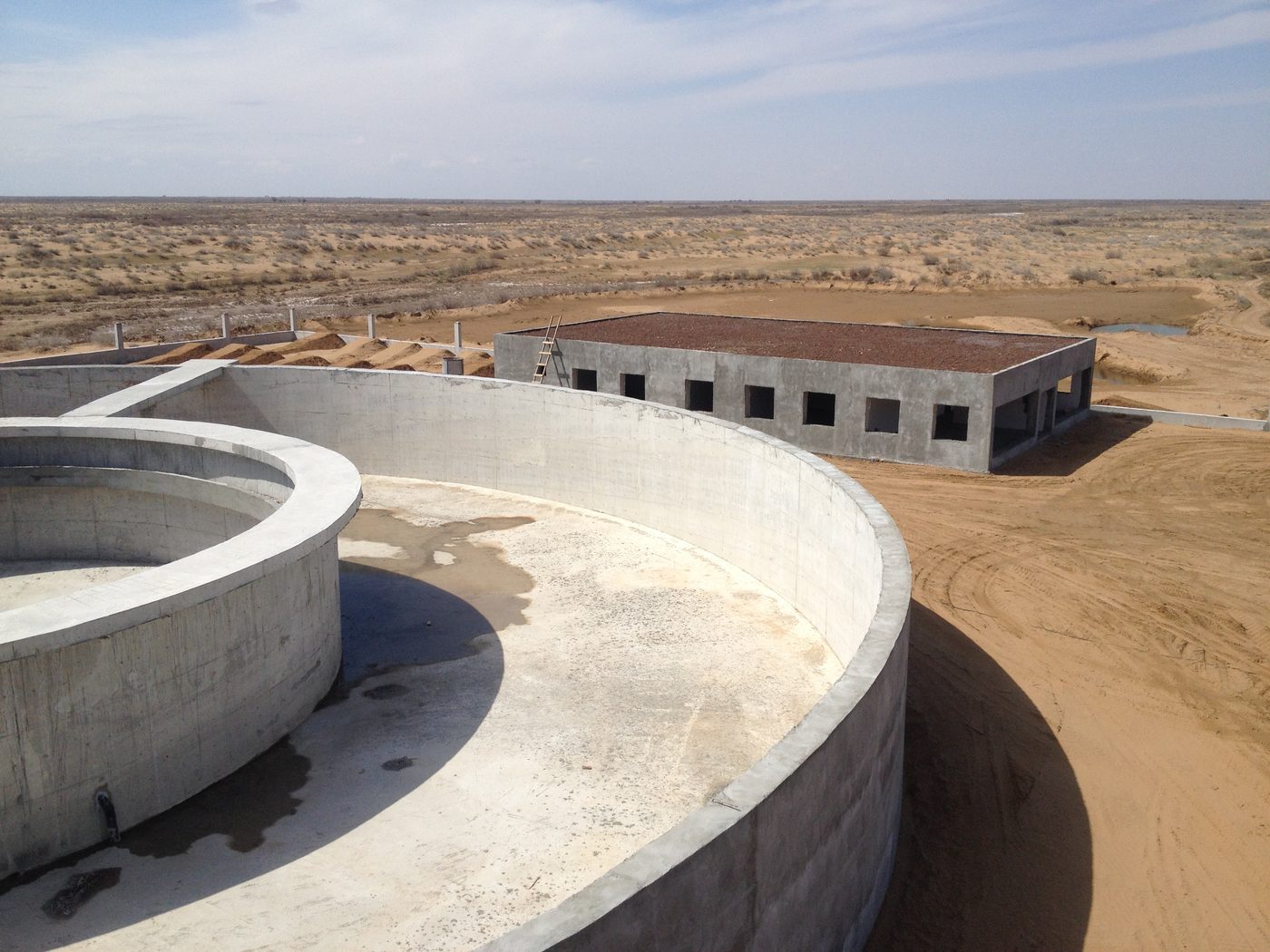
Turkmenistan — Urban Wastewater Treatment Plant
A city-scale plant with a design capacity of 10,000 m³/day: process design and construction by GESU, equipment manufactured in our own factory. The civil works are largely complete; installation and commissioning have not yet been performed.
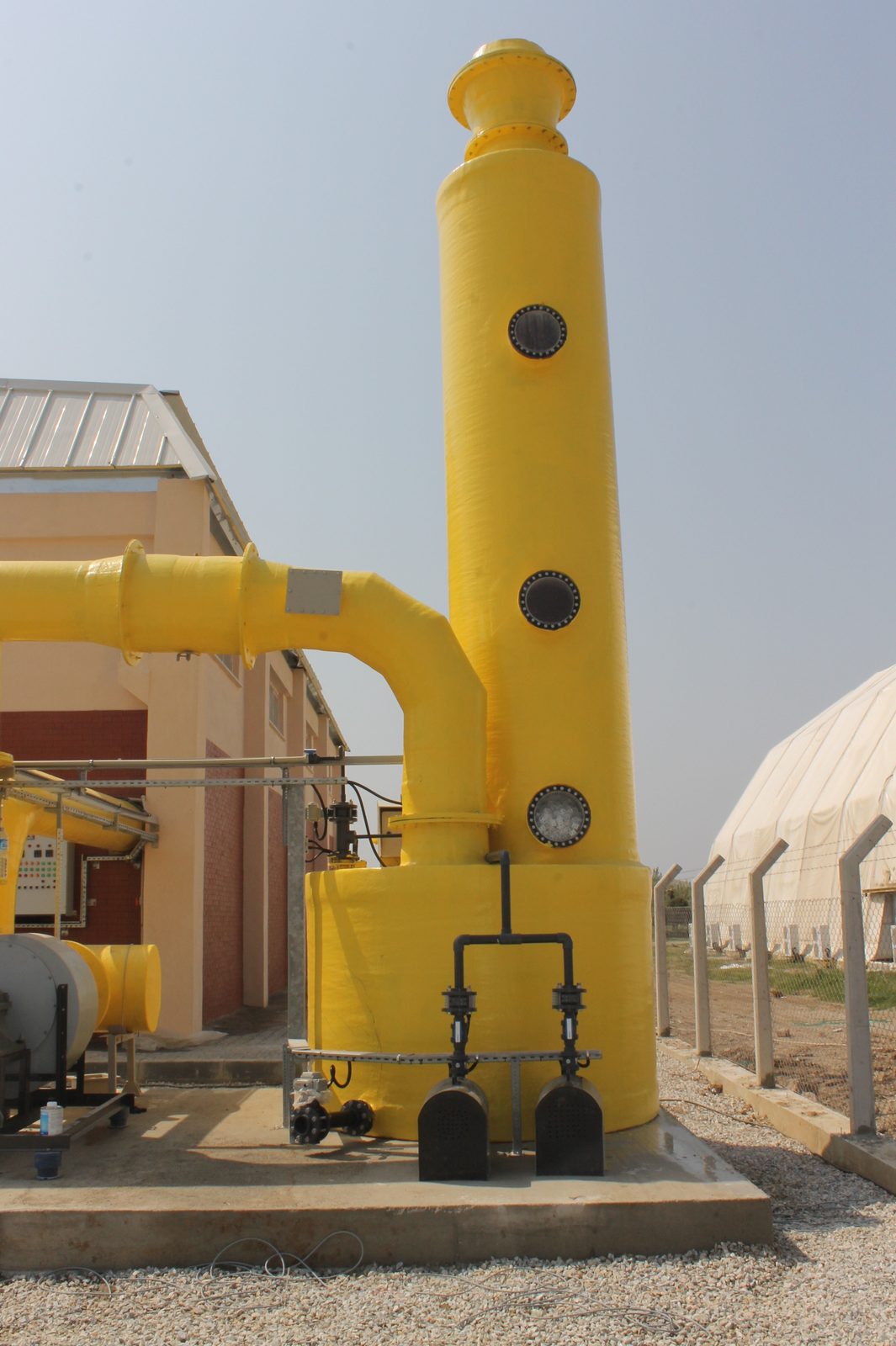
Çanakkale Municipality — Odour Control (Scrubber) Units
GESU-manufactured FRP gas scrubber units for the odour source points at the municipality's treatment plant: manufacturing, installation and commissioning. Site photographs from our 2014 archive.
Let's Talk About Your Project
With 30 years of experience, let's define the solution that best fits your project — together.
Municipal — Frequently Asked Questions
We have compiled the questions our customers ask most often. If you can't find the answer you're looking for, get in touch with us.
What are the main challenges in treating municipal wastewater?
Municipal (domestic) wastewater is characterized by relatively low COD (300-800 mg/L), a high BOD/COD ratio (readily biodegradable), nutrient content (nitrogen, phosphorus) and variable flow (diurnal-seasonal). Industry-sourced oil and detergents and seasonal flow fluctuations are significant issues. Discharge limits (Table 21) are strict.
Which treatment technologies are used?
Standard configuration: screening + grit chamber + clarifier + biological (activated sludge or MBR/MBBR) + disinfection (UV/chlorine). For nutrient removal, A/A/O, BNR or MBR technologies are preferred. For small settlements, package SBR/MBR is the economical solution. The GESU BIOSU series is optimal for municipal applications.
What is the investment cost of a municipal WWTP?
Investment and operating costs vary with the facility, flow rate and discharge target — request a quote for a free preliminary assessment.
Can existing municipal plants be revamped?
Yes. GESU has carried out capacity upgrades (IFAS conversion), nutrient removal additions, MBR conversions and energy efficiency projects at municipal plants. We start with an audit and a feasibility study.
As an industrial treatment company, why should GESU be chosen at city scale?
GESU's roots lie in the process engineering discipline it has developed over 30 years on the most demanding industrial wastewaters. We carry this discipline to the city scale: robust mass balance, designs resilient to sudden shock loads and measurable performance. Because screens, grit-and-oil traps, scrapers, dewatering equipment and tanks are our own manufacture, spare-part and service continuity together with single-point responsibility (EPC) are assured.
Can treated municipal wastewater be used for agricultural irrigation?
Yes. Secondary treatment effluent is brought to a quality suitable for agricultural irrigation, landscape irrigation and process water by passing it through MBR or tertiary membrane filtration and advanced disinfection (UV). For water-scarce regions we design treated water not as a waste but as a strategic resource to be reclaimed. For the detailed process, see our Municipal Wastewater Reuse page.
Do you have international projects for municipalities in MENA, the Gulf and Central Asia?
Through its industrial projects, GESU has gained field, logistics and commissioning experience in 17 countries. We carry this experience to the urban treatment, rehabilitation and water reuse projects of municipalities and water authorities across the Middle East and North Africa (MENA), the Gulf and Central Asia. We incorporate regional conditions such as hot climate, high evaporation, salinity and seasonal population fluctuation into the process design.
Let our references speak for us
500+ completed projects, 17 countries — see what we have done in this industry.
Explore our municipal / domestic references