
Mining Industry Wastewater Treatment
The load in mining wastewater is mineral, not organic: finely ground ore particles turn the water into a slurry, sulphide rock generates acid, and dissolved heavy metals push against discharge limits. High up in the mountains water is precious too — a properly built settling stage returns that water to the process.
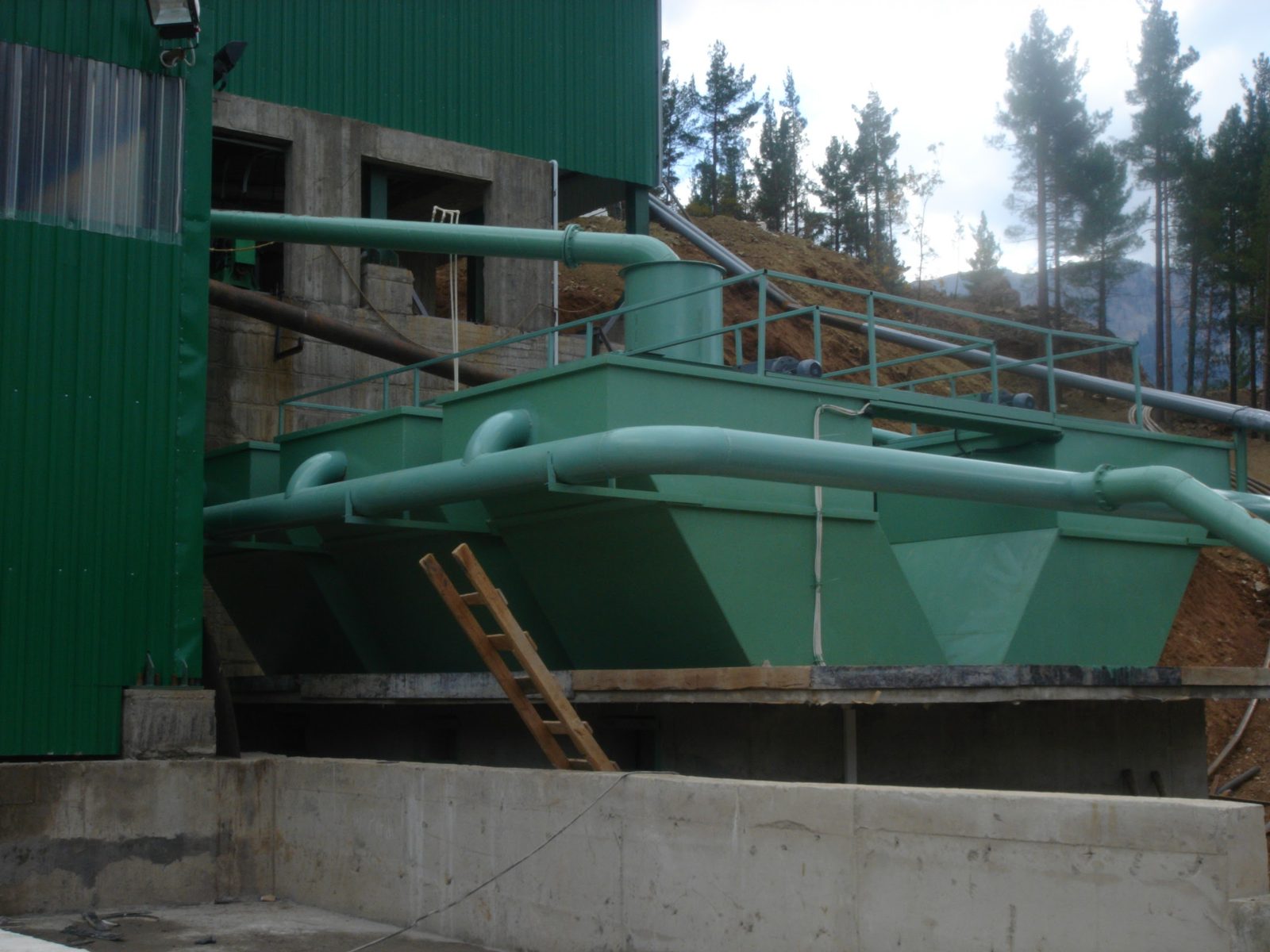
How is mining wastewater treated? Mining and ore beneficiation wastewater is characterized by high suspended solids (fine mineral particles), a heavy metal content that depends on the rock, and — with sulphide ores — the risk of acid mine drainage; because the organic load is low, the solution is not biological but physico-chemical. The standard line is: neutralization + coagulation-flocculation + thickener/settling + filter press; the clarified overflow is returned to the process, reducing the raw water demand. GESU built this line at a chrome ore beneficiation plant in Adana, Türkiye — the site photos below were taken in November 2007.
The four habits of mining wastewater
- High suspended solids / sludge load: grinding and washing waters carry fine mineral particles; these particles do not biodegrade and, left alone, stay in suspension for days.
- Heavy metals: depending on the rock and the process, metals dissolve into the water; discharge limits are low and every metal has a different optimum precipitation pH.
- Acid mine drainage risk: sulphide minerals oxidize with air and water and generate sulphuric acid; the pH drops and metal solubility rises. Water management of the waste rock and tailings area is part of the design.
- Water scarcity: mine sites are often far from a mains supply; raw water is limited while the beneficiation process demands water continuously. Recovery is not a preference, it is a necessity.
The GESU treatment line
- Lime neutralization and metal hydroxide precipitation
- Cone-bottomed settling units and thickeners — our own manufacture
- Dewatering by filter press — disposal as cake
- Return of the clarified overflow to the process — raw water savings
From ore to clear water: step by step
Characterization & Equalization
Solids load, particle size, pH and metal content are measured, and the flow regime of the beneficiation line is established. The design is based on analysis — mining wastewater differs from site to site.
Neutralization
In acidic streams the pH is raised with lime; dissolved metals begin to convert into hydroxides. At sites where acid mine drainage occurs, this stage is the heart of the line.
Coagulation-Flocculation
Fine mineral particles and metal hydroxides are conditioned with a coagulant and polymer; particles that would not settle for weeks on their own turn into flocs that can be separated within minutes.
Thickener / Settling
Flocs are separated in a thickener or in cone-bottomed settling units: the clear overflow is weired off and the thickened sludge is drawn from the conical bottom. At the chrome plant in Adana this stage is GESU-manufactured.
Filter Press
The thickened sludge is dewatered in a filter press; the volume shrinks and the sludge becomes a transportable cake. The filtrate is returned to the plant — no water escapes the site.
Process Water Recovery
The clear overflow is returned to the beneficiation process; the raw water demand and the discharge load shrink together. Where higher quality is needed, a filtration/membrane stage is added.
Adana Chrome Mine — November 2007
Not stock images. The photos below are site pictures of the treatment unit we built for the chrome ore beneficiation plant in Adana, Türkiye. Click to enlarge.
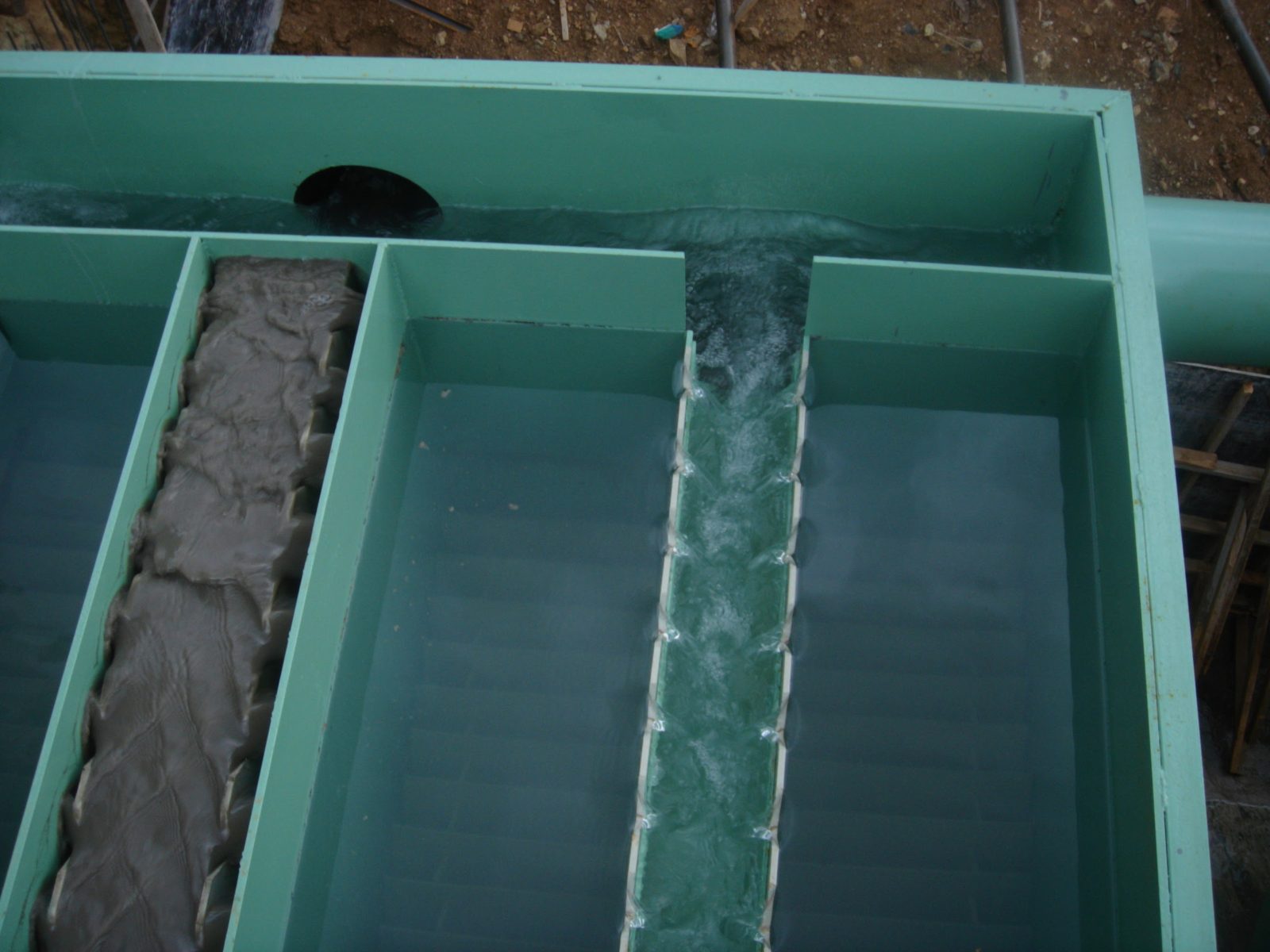
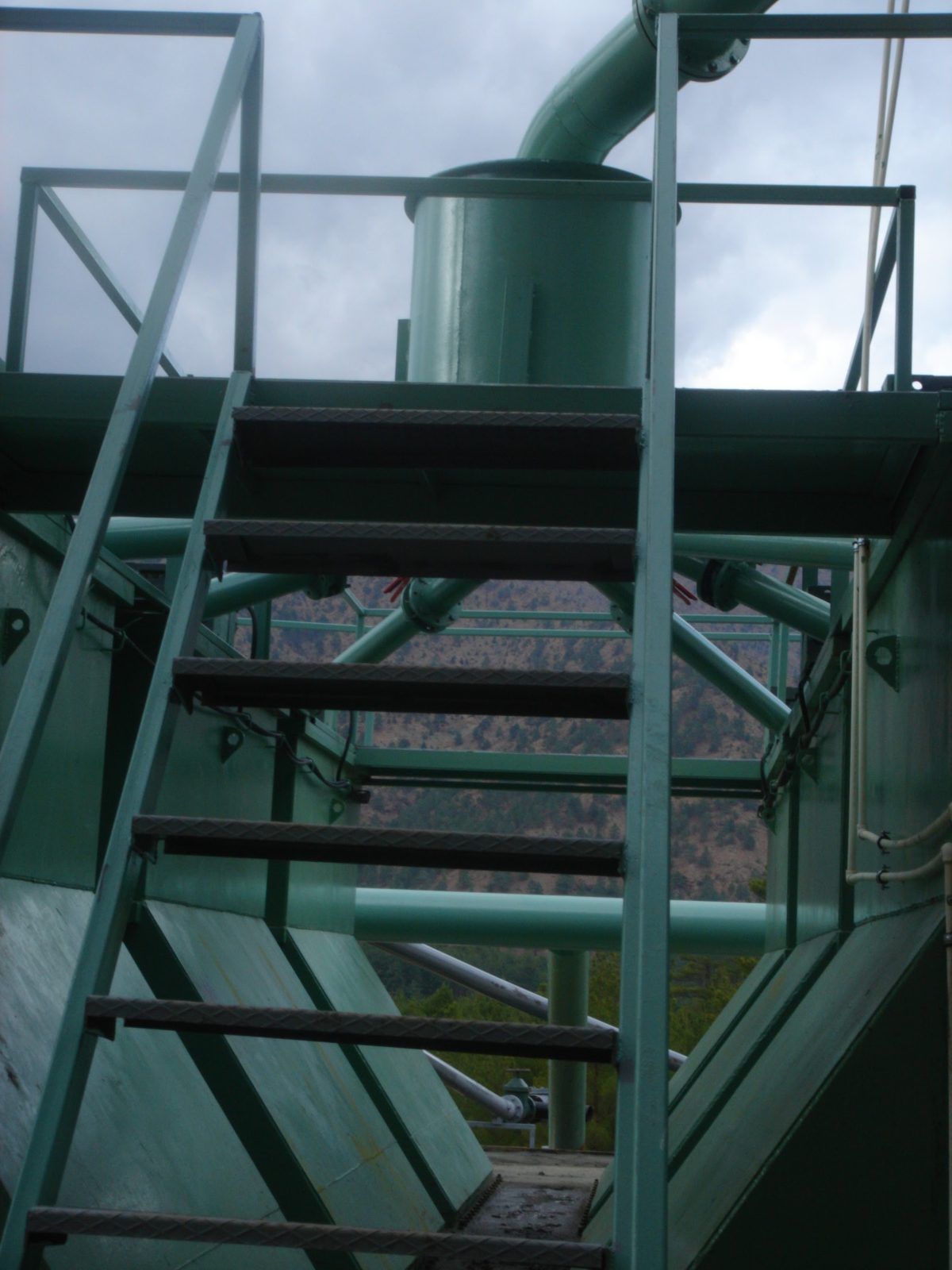
Adana Chrome Mine
For a chrome ore beneficiation plant built on forested mountain terrain in Adana, Türkiye, we installed the treatment line with cone-bottomed settling units, an inlet distribution structure and weir channels. The photos above were taken on site in November 2007: the frame in which a dense mineral stream travels along one channel while clarified water flows over the weirs beside it is the summary of this job — hold back the solids, return the water.
Mining wastewater — frequently asked questions
What makes mining wastewater different from other industries?
The source of the load is mineral, not organic. Finely ground ore particles turn the water into a slurry with high suspended solids; depending on the rock and the process, heavy metals dissolve, and with sulphide ores the risk of acid mine drainage is added. Because the organic load is low, the solution is not biological but physico-chemical: neutralization, chemical conditioning, settling and sludge dewatering.
What is acid mine drainage (AMD), how is it prevented and treated?
When sulphide minerals (pyrite in particular) come into contact with air and water they oxidize; the sulphuric acid produced lowers the pH and dissolves the metals in the rock. The standard treatment approach is lime neutralization, aeration and separation of the precipitated metal hydroxides. Water management of waste rock and tailings storage areas is also part of the design; if drainage is left uncontrolled, the problem continues for the entire life of the site.
Why is ore beneficiation wastewater treatment dominated by settling?
The main load of beneficiation water is finely ground mineral particles that do not biodegrade. Left alone, fine particles stay in suspension for days; conditioned with a coagulant and polymer, they are separated in a thickener or in cone-bottomed settling units. The clear overflow is weired off and the thickened sludge goes to dewatering.
How is water recovered at a mine site?
The settling overflow is of sufficient quality for most beneficiation processes and is returned to the process. Mine sites are usually far from a mains supply, so raw water is limited; the higher the return ratio, the smaller both the water demand and the discharge load. For points that require higher quality, filtration and membrane stages are evaluated.
How are heavy metals removed from water?
The basic mechanism is precipitating the metals as hydroxides by pH adjustment; each metal has a different pH range of minimum solubility, and when several metals are present the operating pH is selected accordingly. Coagulation-flocculation grows the flocs that form, and settling separates them. If the target limits are very low, a filtration stage is added at the end of the line.
Let's talk about the water at your mine site
Send us your wastewater analysis report and process flow diagram if you have them; our engineer will assess your solids load and recovery potential within 48 hours. No obligation to order.
Let our references do the talking
500+ completed projects across 17 countries — see what we have delivered in this industry.
Explore our reference projects