Automotive & Tier Supplier Wastewater Treatment
Oily emulsion coming off the press, rinse water ahead of phosphating, the rinse stages of the cathodic e-coat line… In automotive, wastewater is not a single water; it is the sum of streams whose characters have nothing in common. A stream combined in the wrong place cannot be treated — which is why we start the job by separating the streams.
How is automotive wastewater treated? The wastewater of automotive OEM and tier supplier plants carries three characteristic streams: oily emulsions from pressing and machining (cutting and cooling fluids, wash waters), the rinse waters ahead of phosphating and cathodic e-coat, and surface treatment lines that may contain heavy metals. The standard treatment line is stream segregation + emulsion breaking + chemical treatment (pH adjustment, coagulation-flocculation) + DAF + sludge dewatering with a filter press; a biological stage is added depending on domestic-type streams and the discharge target. GESU has applied this approach at the Maysan Mando (shock absorber manufacturer) and Karsan plants.
The three habits of automotive wastewater
- Oily emulsions: cutting and cooling fluids and wash waters carry oil in emulsified form; the droplets are stable and no separator will hold them unless they are broken chemically.
- Rinse waters ahead of phosphating / cathodic e-coat: they carry metals such as phosphate and zinc and their pH fluctuates; they require chemical precipitation. If concentrated bath dumps are fed into the system uncontrolled, they will collapse the treatment.
- Mixed streams: if process water, the domestic stream and the stormwater line all mix together, the flow grows and no stage can do its own job. Segregation is the first step of the design.
The GESU treatment line
- Selection of the emulsion breaking chemical by jar test
- PP / stainless process tanks, platform and pipework — our own manufacture
- Complete delivery including dosing units and control panel
- Chemical sludge dewatering with a filter press
From the press to discharge: step by step
Stream Segregation & Equalization
The oily emulsion, the phosphating/e-coat rinse waters and the domestic stream are collected separately. The equalization volume absorbs shift peaks; concentrated bath dumps are stored and fed into the system little by little.
Emulsion Breaking
Stable oil droplets are destabilized by chemical conditioning and the released oil becomes separable. The chemical is selected by jar test; not every emulsion breaks with the same recipe.
Chemical Treatment
pH adjustment + coagulation-flocculation: phosphate and metals are precipitated and the broken oil is captured inside the floc. The dosing units and reaction tanks are the heart of the line.
DAF — Dissolved Air Flotation
Oil and flocs are floated with micro-bubbles and skimmed off. If the emulsion has been broken properly, the DAF outlet clears up visibly; if it has not, no flotation can compensate for it.
Biological Stage — Where Required
For discharge to the sewer of an organized industrial zone (OIZ) the chemical line is usually sufficient. If there is discharge to a receiving body, a low COD target or a domestic-type stream, biological treatment is added; the decision is made by characterization.
Sludge Management
Chemical sludge is dewatered with a filter press and its volume shrinks as a cake. The disposal status of metal-bearing sludge is determined by analysis; it is sent to a licensed disposal facility.
Real plants, real photos
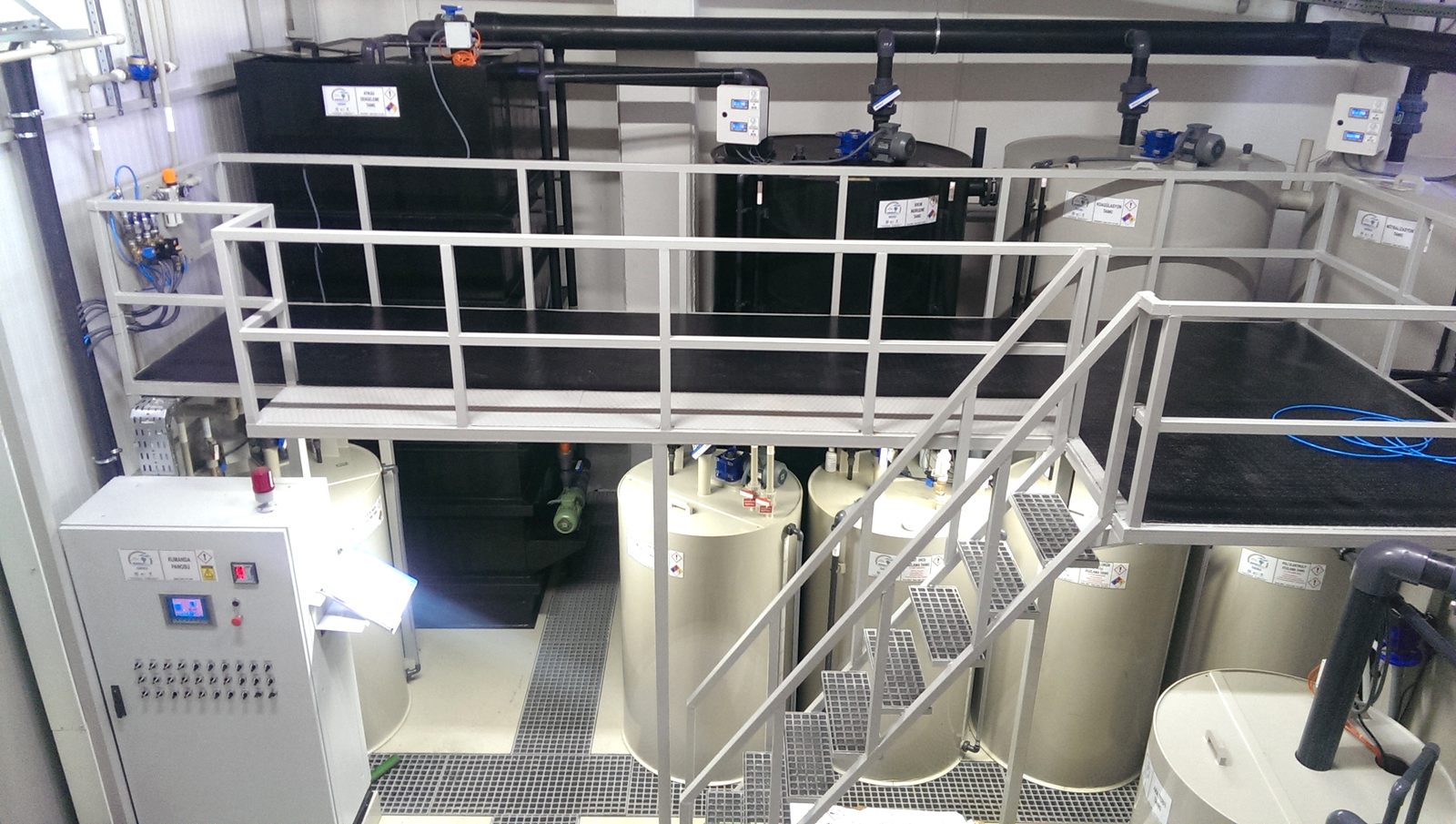
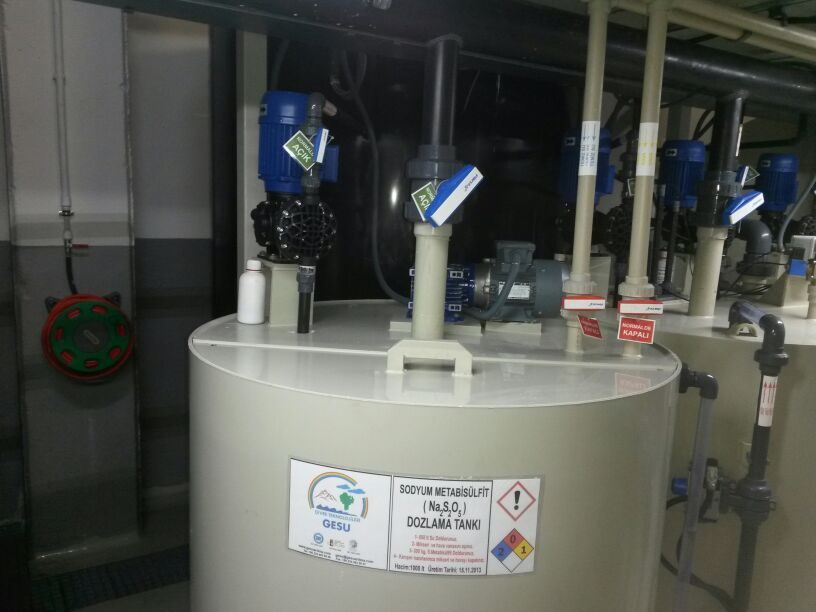
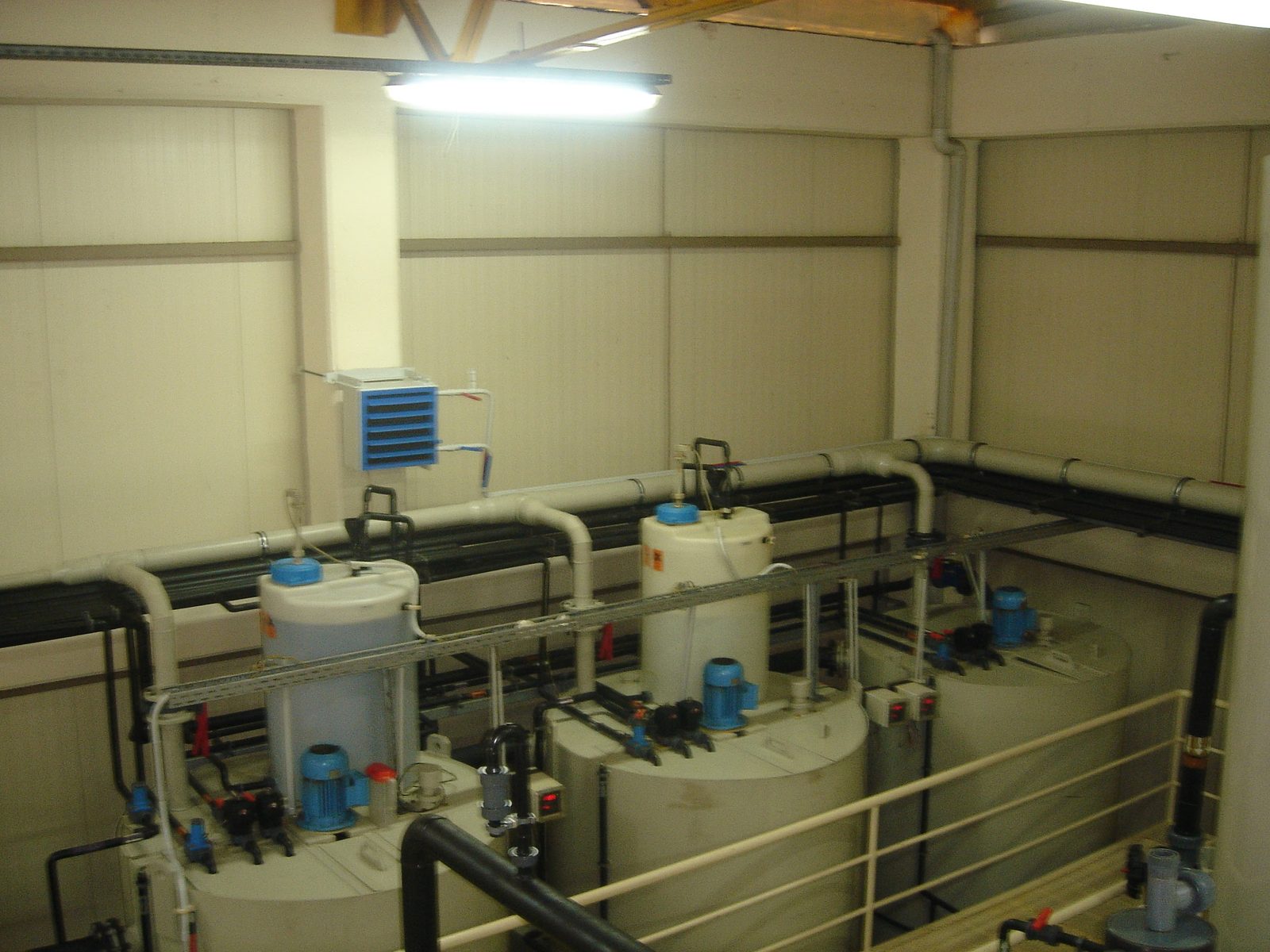
Not stock images. Every photo below is from a real GESU automotive reference. Click to enlarge.
Our automotive references
Our automotive references with site photographs on this page are the shock absorber manufacturer Maysan Mando and Karsan. The gallery photos above come from these two sites; the Maysan Mando chemical treatment unit photos, dated 2013, are in our archive. You can see our plating and chemical treatment references from the automotive supplier industry (Bosch Fren, Ermetal, Matay, Componenta, Parsan, Presmak, TMK Kataforez) on the Metal Finishing & Plating page. We prefer telling a few references with real photographs over long but undocumented lists.
Automotive wastewater — frequently asked questions
Why is an oily emulsion not fed straight to the DAF?
The oil in cutting and cooling fluids is emulsified: the droplets are stable and neither float nor settle on their own. Unless the emulsion is broken by chemical conditioning, no performance can be obtained from the DAF. The correct order is emulsion breaking first, flotation second; and the chemical selection is determined by a jar test.
Why are the rinse waters ahead of phosphating and cathodic e-coat handled separately?
These streams carry metals such as phosphate and zinc, and their pH fluctuates. If they are combined with the oily or domestic stream right at the start, chemical consumption rises and settling efficiency falls. They are collected separately and treated by chemical precipitation; concentrated bath dumps are stored and fed into the system in a controlled way, little by little.
Is biological treatment needed at an automotive plant?
It depends on the streams and the discharge target. Emulsion breaking + chemical treatment + DAF takes the main load; for discharge to the sewer of an organized industrial zone (OIZ) this line is usually sufficient. If there is discharge to a receiving body, a low COD target or a domestic-type stream to be treated, a biological stage is added. The decision is not made by reflex but by wastewater characterization.
How is chemical treatment sludge managed?
Settling and DAF sludge is dewatered with a filter press; as a cake its volume shrinks. The disposal status of metal-bearing sludge is determined by analysis and it is sent to a licensed disposal facility. The filter press is one of our own manufactured items.
Let's talk about your plant's wastewater
Send us your wastewater analysis report if you have one; our engineer will assess your emulsion and metal load within 48 hours. No obligation to order.
Let our references do the talking
500+ completed projects across 17 countries — see what we have delivered in this industry.
Explore our reference projects