
MBR Membrane Bioreactor
The activated sludge process combined with ultra/microfiltration membranes. Effluent ready for reuse.
What Is MBR Technology?
MBR (Membrane Bioreactor) is an advanced biological treatment technology that combines the conventional activated sludge process with ultrafiltration or microfiltration membranes. The most critical difference is this: the clarifier that separates the treated water from the solids in a classic system is replaced by a membrane barrier with sub-micron pores.
Thanks to that barrier, the effluent quality is continuously high, independently of the settling behaviour of the sludge (TSS ~0, BOD typically <5 mg/L, turbidity typically <1 NTU; the values vary with the wastewater and the design). Since the membrane also retains bacteria and, to a large extent, viruses, the effluent is hygienically far superior.
This quality makes MBR stand out in two areas: water reuse (the effluent is suitable as a direct RO feed or for irrigation) and the compact plant (a small volume thanks to high MLSS). For GESU, MBR is the biological backbone of the strategy of "turning treatment into a process that reclaims water". This article explains how MBR works, which membrane types exist, where it makes sense and the finer points of operation.
How Does an MBR Work? — Step by Step
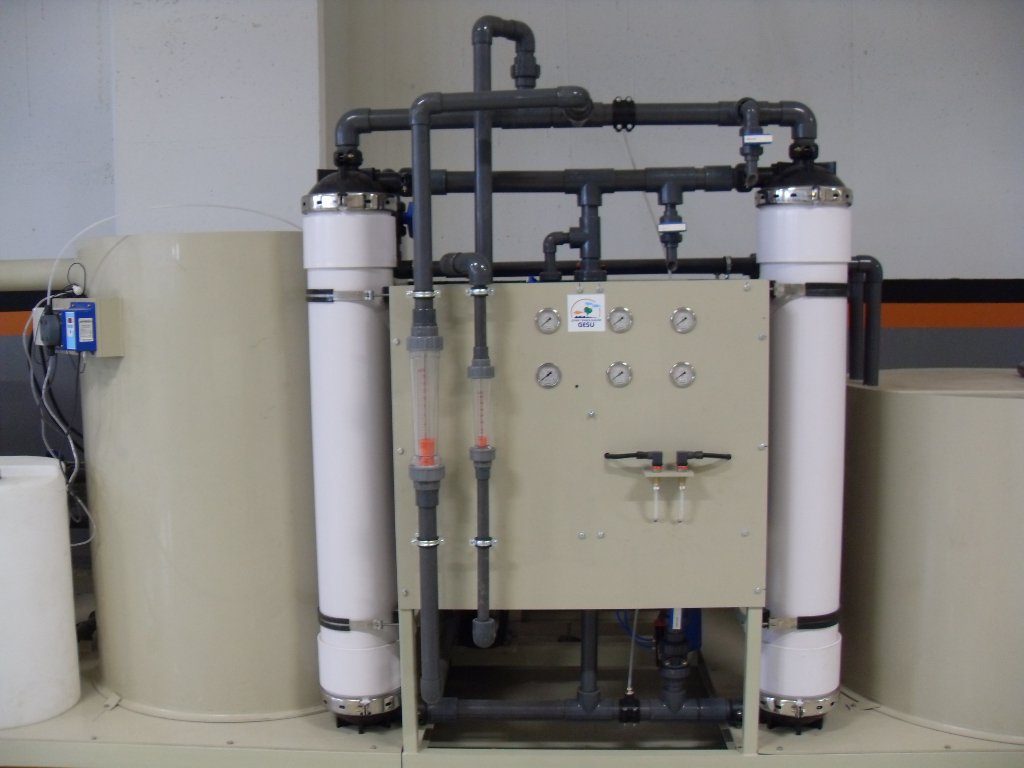
MBR combines biological treatment and membrane filtration in a single continuous loop. The basic idea: the microorganisms "eat" the pollution, while the membrane separates the clean water from the solids with an absolute barrier.
Pre-treatment & Fine Screen
Coarse solids, hair and fibres and oil and grease are removed. In an MBR a fine screen (typically 1-3 mm) is virtually mandatory; the substances that scratch or wrap around the membrane are stopped here.
Anoxic / Anaerobic Basin (where required)
A denitrification / biological phosphorus stage is added for nitrogen and phosphorus removal. It is fed by recycling mixed liquor from the membrane tank.
Aerobic Biological Treatment (High MLSS)
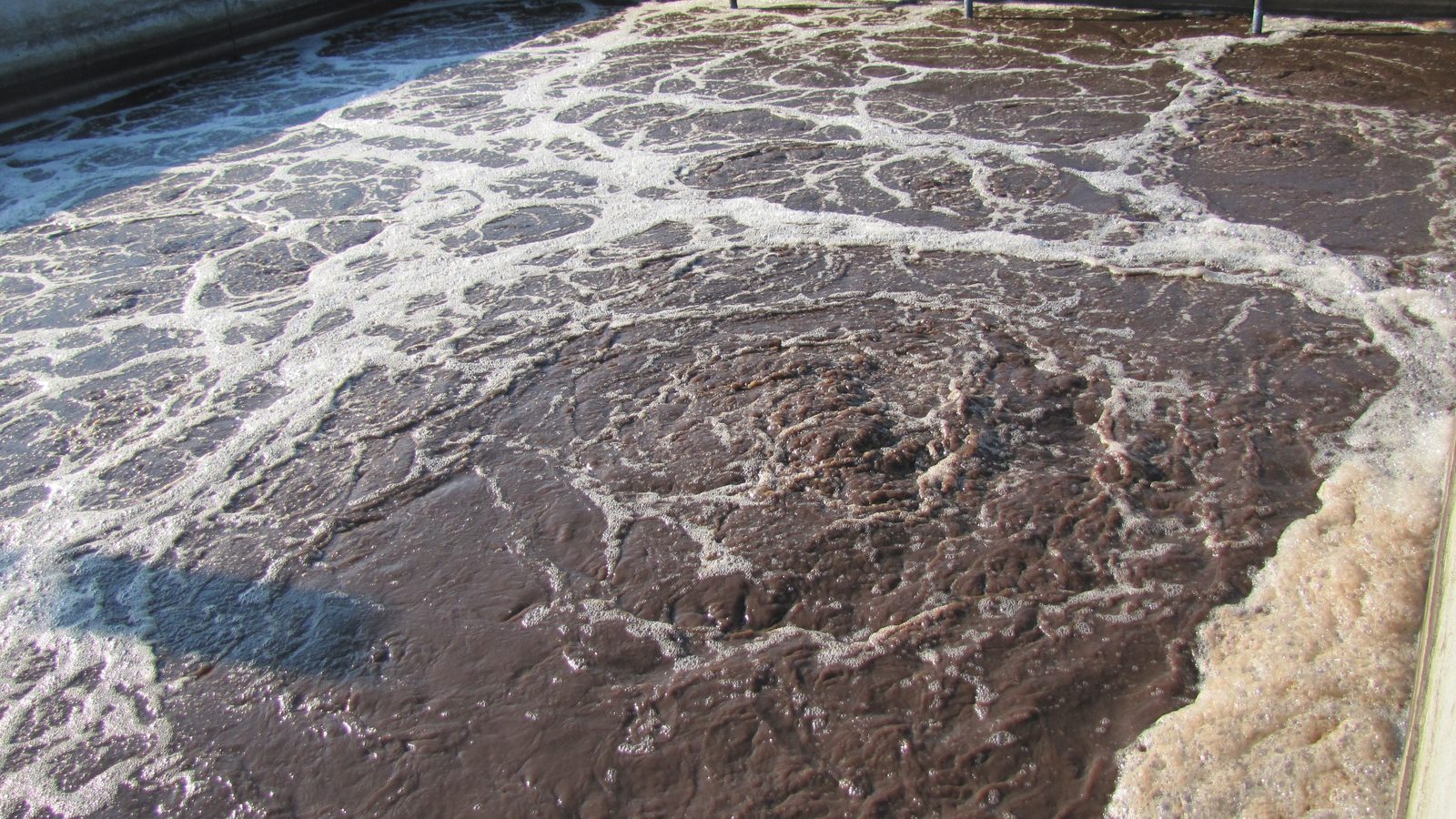
In the aerated tank the microorganisms remove the organic matter. An MBR typically operates at 8,000-15,000 mg/L MLSS — 2-3 times that of a classic system — which means a high treatment capacity in a small volume.
Membrane Filtration (Permeate Suction)
The membrane modules filter the water through their pores (typically ~0.04 µm). The clean water (permeate) is drawn off under a low vacuum; solids, bacteria and viruses stay in the tank. The membrane surface is continuously swept by air bubbles (scouring).
Outlet: Water Ready for Reuse
The permeate is clear, of low SDI and of disinfected quality; it goes to reuse either directly for irrigation/process or as RO feed. The excess sludge is periodically withdrawn from the system.
Membrane Types & Configuration
There are two main choices in an MBR: where the membrane sits (submerged / external) and the form of the membrane (flat sheet / hollow fibre). The right combination is determined by the wastewater character.
Submerged (Immersed)
The modules are immersed directly inside the tank; the permeate is drawn off under a low-pressure vacuum. Energy consumption is low. It is the standard in domestic/municipal and most industrial applications.
External (Cross-flow)
The mixed liquor is pumped at high velocity through membranes outside the tank. It demands more energy but is the safe option for demanding industrial wastewaters that are very heavily loaded, oily or at high temperature.
Flat Sheet
Mechanically robust, tolerant of clogging, easy to clean. A safe choice at high MLSS and with demanding wastewaters. (The Kubota flat sheet MBR currently under construction at Namet Gümüşova belongs to this family; commissioning is scheduled for the end of 2026.)
Hollow Fibre
Offers a higher membrane area per unit volume and can be backwashed. Advantageous where compactness and high flux are the priority.
The characteristics stated are typical orientations; the final membrane selection is made according to the wastewater analysis and the design criteria.
Working Principle
Submerged or External
Membrane modules can be placed inside the aeration tank (submerged) or outside it (external / cross-flow).
High MLSS
Operating at 8,000–15,000 mg/L MLSS, a basin volume 50% smaller than in a conventional system is sufficient.
Bacteria Barrier
With a typical pore size of ~0.04 µm it retains bacteria and, to a large extent, viruses; depending on the intended use, additional disinfection (UV/chlorine) may be required.
Application Areas
Water Reuse
- Industrial process water recovery
- RO pre-treatment (MBR+RO integration)
- Irrigation water quality (total coliform <1)
Where a Compact Plant Is Required
- Industrial sites with limited space
- Hotels, hospitals, shopping centers
- Capacity increase at an existing plant (retrofit)
When Does MBR Make Sense?
MBR stands out particularly where the effluent quality must be high, the space is limited, or the water is going to be reclaimed. The values below are typical orientations; the exact design rests on the wastewater analysis.
| Sector / Situation | Why MBR Suits | Key Value | Typical Configuration |
|---|---|---|---|
| Food & Beverage | High COD, seasonal load; water reuse target | Effluent ready for RO | Flat sheet, submerged |
| Integrated Meat Plant | Heavy organic load plus oil; reuse is a necessity | Stable effluent quality | Flat sheet, submerged (after DAF) |
| Hotel / Hospital / Shopping Centre | Limited space; hygienic effluent; garden irrigation | Compact + disinfected water | Packaged MBR, submerged |
| Municipal / Industrial Zone | High flow; reuse for irrigation | Very low total coliform | Submerged, flat sheet/hollow fibre |
| Demanding Industrial (oily/hot) | Very heavily loaded wastewater; classic clarification insufficient | Independence from settling problems | External (cross-flow) |
| Capacity Increase at an Existing Plant | Need for more flow without enlarging the basins | More capacity in the same footprint | Retrofit, submerged |
Note: the orientations in the table are typical magnitudes, not commitments. For every project the real design is verified by laboratory analysis and, where necessary, a pilot study.
Operating Tips
The performance of an MBR and the life of its membranes depend on operating discipline. An operation that protects the membrane is worth more than the finest piece of equipment.
Take the fine screen and the pre-treatment seriously
Hair, fibres and oil wrap around and plug the membrane. A solid fine screen (typically 1-3 mm) and oil removal prevent most membrane failures before they even occur.
Set the membrane aeration (scouring) correctly
The air that sweeps the membrane surface is the main mechanism preventing clogging. Too little air means rapid fouling, too much air means wasted energy; hold that balance in the design.
Keep MLSS and TMP within the design range
A very high MLSS strains the aeration and the viscosity; a rise in the transmembrane pressure (TMP) is the early herald of clogging. Monitor the two together.
Do not neglect the planned chemical cleaning (CIP)
Regular maintenance cleaning and a periodic intensive CIP restore the flux. A delayed cleaning means irreversible flux loss and early membrane replacement.
Keep records, train the operator
Records of flux, TMP, MLSS and chemical consumption are the only way to find the root cause of a problem. A trained operator directly extends membrane life.
The GESU Difference
Related Solutions & Detail Pages
What Is Reverse Osmosis (RO)?
The engineering guide to the stage that follows MBR in the reuse chain.
MBR Technology Page
Engineering details and design criteria of MBR technology.
Ultrafiltration (UF)
The membrane barrier used in MBR, UF and RO lines.
Water Reuse & ZLD
Near-zero discharge with MBR+RO — the backbone of water reuse.
Frequently Asked Questions
If you cannot find the answer you are looking for, get in touch with our engineers.
What is the difference between MBR and conventional activated sludge?
In conventional activated sludge the treated water is separated from the solids by gravity in a clarifier; that separation depends on the settling behaviour of the sludge and can fluctuate. In an MBR a membrane barrier takes the place of the clarifier: the water leaves by being filtered through membranes with sub-micron pores. The result is a continuously clear effluent (free of suspended solids) that is independent of sludge settling, and a far more compact plant.
What is the difference between submerged (immersed) and external (cross-flow) MBR?
In a submerged MBR the membrane modules are immersed directly inside the aeration/membrane tank and the permeate is drawn off by a low-pressure vacuum; energy consumption is low and it is widespread in domestic/municipal and most industrial applications. In an external (cross-flow) MBR the mixed liquor is pumped at high velocity through membranes located outside the tank; it consumes more energy but is preferred for demanding wastewaters that are very heavily loaded, oily or at high temperature.
Which is better, flat sheet or hollow fibre membranes?
Both have their place. Flat sheet membranes are mechanically robust, tolerant of clogging and easy to clean; they are safe at high MLSS and with demanding wastewaters. Hollow fibre membranes offer a higher membrane area per unit volume and can be backwashed. The choice is made according to the wastewater character, the MLSS target, the available space and the operating preference.
Why is MBR the ideal pre-treatment ahead of RO?
RO membranes are highly sensitive to fouling by suspended solids, colloids and organics, and they require a feed with a low SDI. Because MBR effluent is completely free of suspended solids and bacteria and has low turbidity and a low SDI, it is an almost ideal feed for RO. This is why MBR+RO is the most common backbone in water reuse and ZLD plants.
How much space does an MBR save?
Because an MBR can operate at high MLSS (typically 8,000-15,000 mg/L) and does not require a separate clarifier, it fits into a markedly smaller footprint than conventional activated sludge. That compactness makes MBR particularly attractive for industrial sites with limited space, hotels, hospitals and capacity upgrades of existing plants (retrofit). The exact saving varies with the wastewater character and the design criteria.
How is membrane fouling prevented?
Fouling is the most critical subject in MBR operation. Prevention means: adequate pre-treatment (removal of oil and grease and of coarse solids), the correct aeration that scours the membrane surface, keeping MLSS within the design range, monitoring the transmembrane pressure (TMP) and planned maintenance/chemical cleaning. A delayed cleaning leads to irreversible flux loss.
Can an MBR be added to an existing plant (retrofit)?
Yes. Conventional activated sludge plants whose capacity has become insufficient, or whose effluent quality needs to be raised, can be converted to MBR by installing membrane modules in the existing basins. This provides a higher flow and much better effluent quality within the same footprint. Suitability is determined by assessing the existing basin volume and the infrastructure.
Let's Talk About Your Project
With 30 years of experience, let's define the most suitable solution for your project together.