
MBR Membrane Bioreactor
The activated sludge process combined with ultra/microfiltration membranes. Effluent ready for reuse.
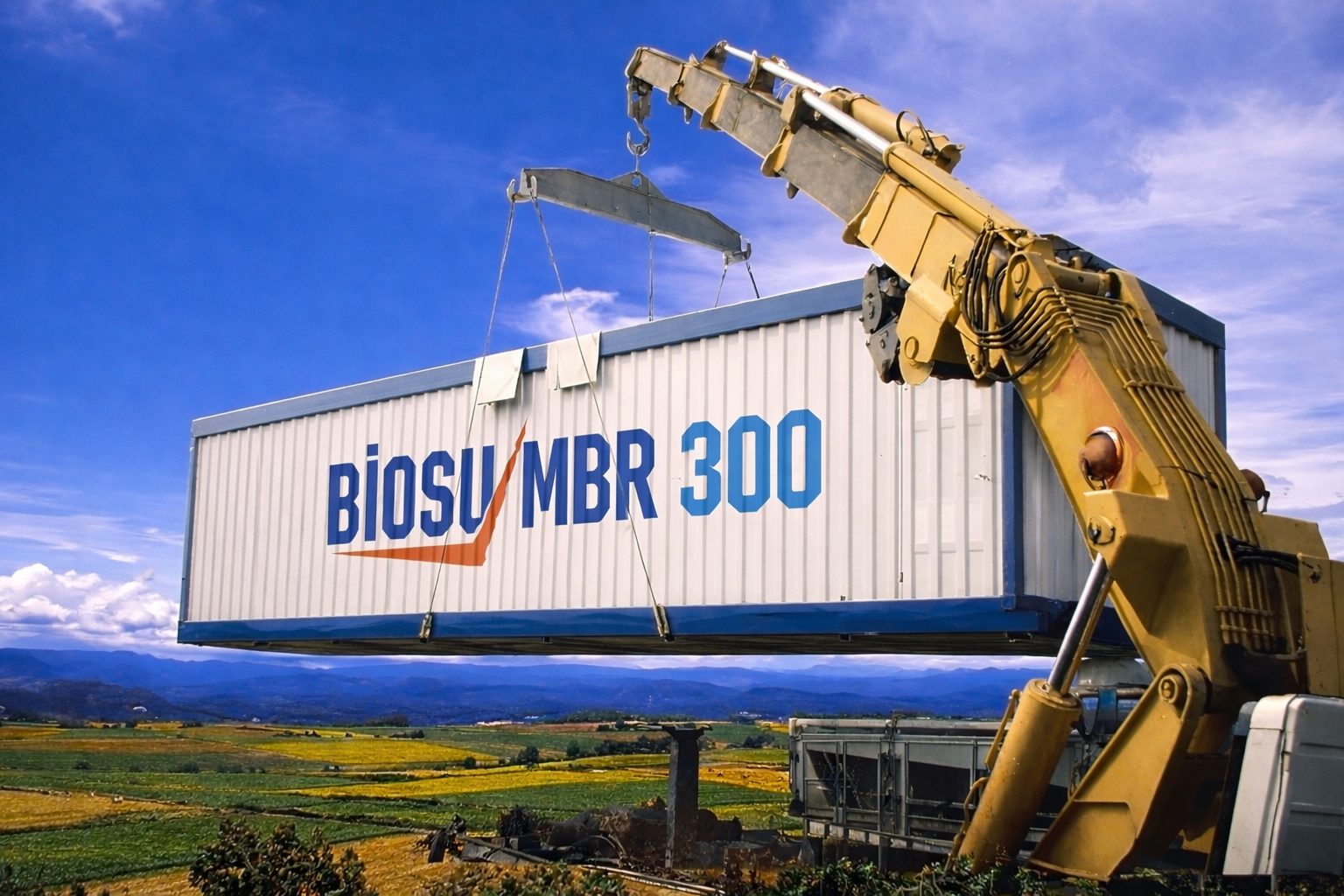
What Is MBR Technology?
MBR (Membrane Bioreactor) is an advanced biological treatment technology that combines the conventional activated sludge process with ultrafiltration or microfiltration membranes. Membrane modules are used instead of a secondary clarifier.
Thanks to the membrane barrier, the effluent quality is consistently high (TSS ~0, BOD <5 mg/L, turbidity <1 NTU). This quality makes the water suitable for reuse purposes such as direct RO feed or irrigation.
Working Principle
Submerged or External
Membrane modules can be placed inside the aeration tank (submerged) or outside it (external / cross-flow).
High MLSS
Operating at 8,000–15,000 mg/L MLSS, a basin volume 50% smaller than in a conventional system is sufficient.
Bacteria Barrier
With a 0.04 µm pore size it retains bacteria and suspended solids; where virus safety is required for reuse, it is complemented by UV or chlorine disinfection.
Application Areas
Water Reuse
- Industrial process water recovery
- RO pre-treatment (MBR+RO integration)
- Irrigation water quality (total coliform <1)
Where a Compact Plant Is Required
- Industrial sites with limited space
- Hotels, hospitals, shopping centers
- Capacity increase at an existing plant (retrofit)
The GESU Difference
Related Technologies
Treatment technologies GESU engineers and manufactures.
Fill-react-settle-decant cycles in a single tank; flexible for variable loads.
Carrier media biofilm process; capacity upgrade without enlarging the tank.
Chemical conditioning that turns colloids into settleable/floatable flocs.
High-pressure membrane desalination and polishing for water reuse.
Barrier against suspended solids and colloids; standard pre-treatment before RO.
Thickening, conditioning and dewatering — filter press, belt press, decanter.
Chemical and biological washing towers for odour, acid and alkaline gas control.
GESU's flagship product: oil, grease and TSS removal, manufactured in-house.
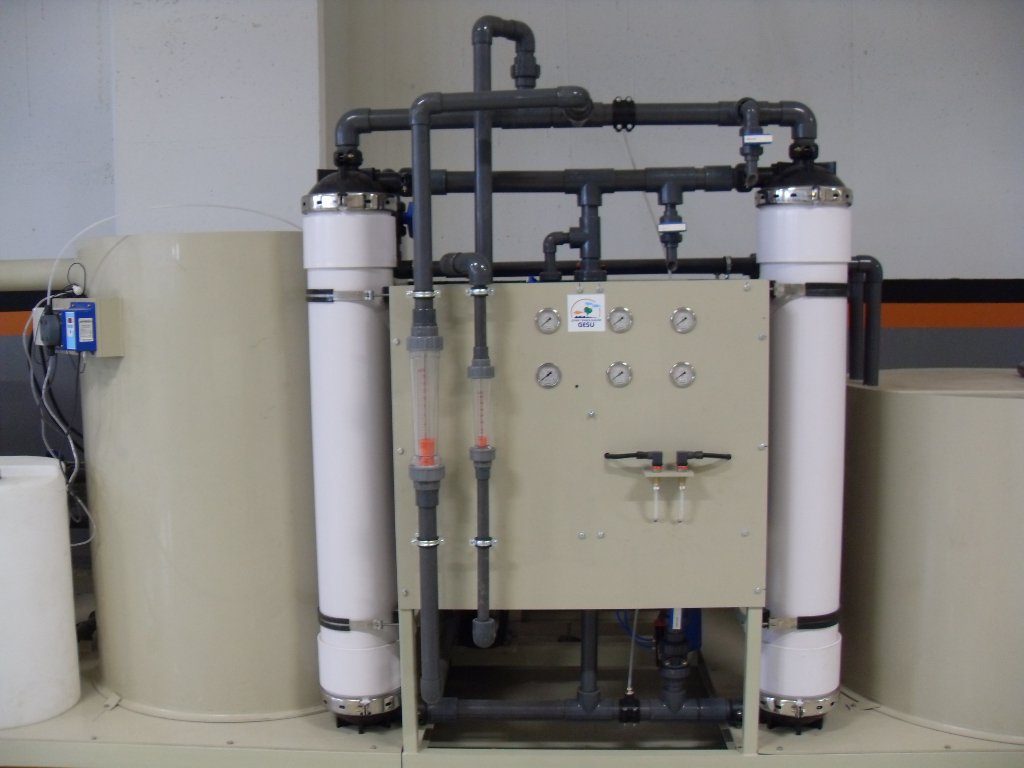
From the Field & the Workshop
Not stock imagery — our own manufacturing, our own sites.
Let's Talk About Your Project
With 30 years of experience, let's define the most suitable solution for your project together.
MBR — Frequently Asked Questions
We have gathered the questions our customers ask most often. If you can't find the answer you're looking for, get in touch with us.
How does an MBR (membrane bioreactor) work?
MBR is the combination of activated sludge biological treatment with microfiltration/ultrafiltration membrane separation. Instead of a conventional clarifier, the biomass-water separation is carried out by a membrane module immersed inside the bioreactor (submerged) or installed outside it (external). With a pore opening of 0.04-0.4 µm, the membrane retains all bacteria and suspended solids. The effluent, at <1 NTU and <0.1 mg/L suspended solids, is ready for reuse.
In which industries is MBR used?
MBR is used wherever high-quality effluent is required: food, beverage, textile, automotive, hospitals, hotels, water reuse, sites with limited space (compact plants), packaged domestic treatment (BioSu MBR) and industrial wastewater reuse. It is an ideal choice particularly as pre-treatment ahead of RO.
What is the energy consumption of an MBR system?
MBR energy consumption is in the range of 0.8-2.0 kWh/m³ (2-3 times that of conventional activated sludge). Around 50% of this is aeration (biological + membrane scour), around 30% the permeate suction pump and 20% the other pumps. With new-generation low-pressure (LP) membranes and efficient aerators, values below 1 kWh/m³ are reached.
What are the alternatives to MBR, and why is MBR preferred?
Alternatives: conventional activated sludge + sand filter + UF (three separate stages), SBR + UF, MBBR + clarifier. Reasons for choosing MBR: (1) a 30-50% smaller footprint, (2) much higher MLSS (8-15 g/L) enabling a high volumetric load, (3) operation independent of sludge age, (4) biological treatment and filtration in a single stage, (5) continuously stable <1 NTU effluent. Disadvantage: higher energy demand and periodic membrane replacement.