
MBBR Moving Bed Biofilm Reactor
Compact biological treatment over a high surface area, using biofilm grown on carrier media.
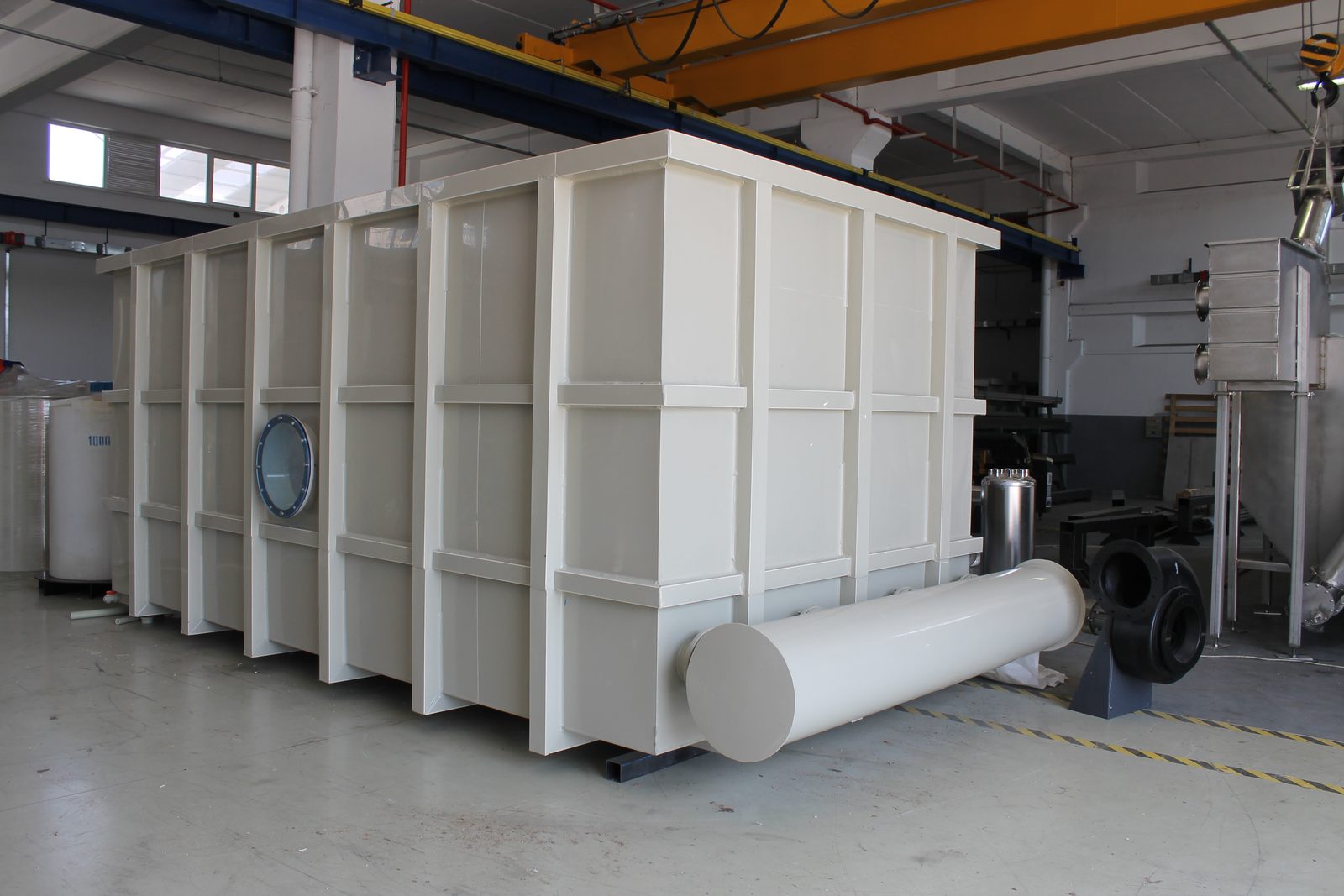
What Is MBBR Technology?
MBBR (Moving Bed Biofilm Reactor) is a biological system that treats wastewater by forming a biofilm layer on plastic carrier media added to the aeration basin. The media move freely and are in continuous contact with the wastewater.
Compared with conventional activated sludge it provides a far higher biomass concentration, requires no return sludge recirculation, and can easily be integrated into existing plants (retrofit).
Working Principle
High Surface Area
Each media type provides 500–800 m²/m³ of specific surface area. The biofilm develops on these surfaces.
No Sludge Recirculation
No return activated sludge line is required. Simpler operation and lower energy consumption.
Easy Retrofit
By adding media to existing aeration basins, capacity can be increased by 50-100%.
Areas of Application
New Plants
- Food and beverage industry
- Small to medium scale domestic treatment
- Plants with a high nitrogen load
Capacity Upgrade
- Retrofit into an existing activated sludge system
- Adaptation to seasonal load increases
- Intensification in plants with limited footprint
The GESU Difference
Related Technologies
Treatment technologies GESU engineers and manufactures.
Biological treatment combined with membrane separation; compact footprint, effluent ready for reuse.
Fill-react-settle-decant cycles in a single tank; flexible for variable loads.
Chemical conditioning that turns colloids into settleable/floatable flocs.
High-pressure membrane desalination and polishing for water reuse.
Barrier against suspended solids and colloids; standard pre-treatment before RO.
Thickening, conditioning and dewatering — filter press, belt press, decanter.
Chemical and biological washing towers for odour, acid and alkaline gas control.
GESU's flagship product: oil, grease and TSS removal, manufactured in-house.
Let's Talk About Your Project
With our 30 years of experience, let's determine the most suitable solution for your project together.
MBBR — Frequently Asked Questions
We have gathered the questions our customers ask most often. If you can't find the answer you are looking for, get in touch with us.
How does MBBR (Moving Bed Biofilm Reactor) work?
MBBR is a biological treatment technology that removes organic matter by means of a biofilm growing on dedicated plastic carrier media (K1, K3, K5) inside the bioreactor. The media are kept in continuous circulation in the reactor by the aeration. No return sludge recirculation is required. Typical media fill ratio is 40-67%.
In which industries is MBBR used?
MBBR is used for industrial wastewater with a high organic load (food, beverage, paper), for capacity upgrades of existing plants (as IFAS), in denitrification stages and in packaged domestic treatment plants. It is resilient to temperature and load fluctuations.
What is the energy consumption of MBBR?
MBBR energy consumption is in the range of 0.5-1.2 kWh/m³ (aeration being the main item). Because no return sludge recirculation pump is needed, it is slightly lower than for activated sludge.
What are the alternatives to MBBR, and what are its advantages?
Alternatives: activated sludge, SBR, MBR. Advantages of MBBR: (1) compact structure (high biomass concentration), (2) no sludge bulking problem, (3) fast start-up, (4) resilience to load shocks, (5) capacity upgrade by adding media to an existing basin (IFAS). Disadvantage: effluent quality is lower than with membrane filtration.