
Sludge Treatment & Dewatering
Disposal of treatment sludge at minimum volume through thickening, stabilization and dewatering.
What Is Sludge Treatment?
Sludge treatment is the set of processes applied to reduce the volume of the biological and chemical sludges generated during wastewater treatment, to stabilize them and to make them ready for disposal.
The main stages are thickening (gravity or mechanical), stabilization (aerobic/anaerobic), conditioning (polymer dosing) and dewatering (filter press, screw press, belt press, decanter centrifuge). Sludge volume is reduced by 90-95%, lowering transport and disposal costs.
How It Works
Thickening
Gravity thickener or mechanical belt thickener. The sludge is concentrated to 3-6% DS.
Conditioning
Polyelectrolyte or FeCl₃ dosing prepares the sludge structure for dewatering.
Dewatering
Filter press (30-40% DS), screw press (18-25% DS), belt press (18-25% DS), decanter centrifuge (20-30% DS).
Dewatering Equipment
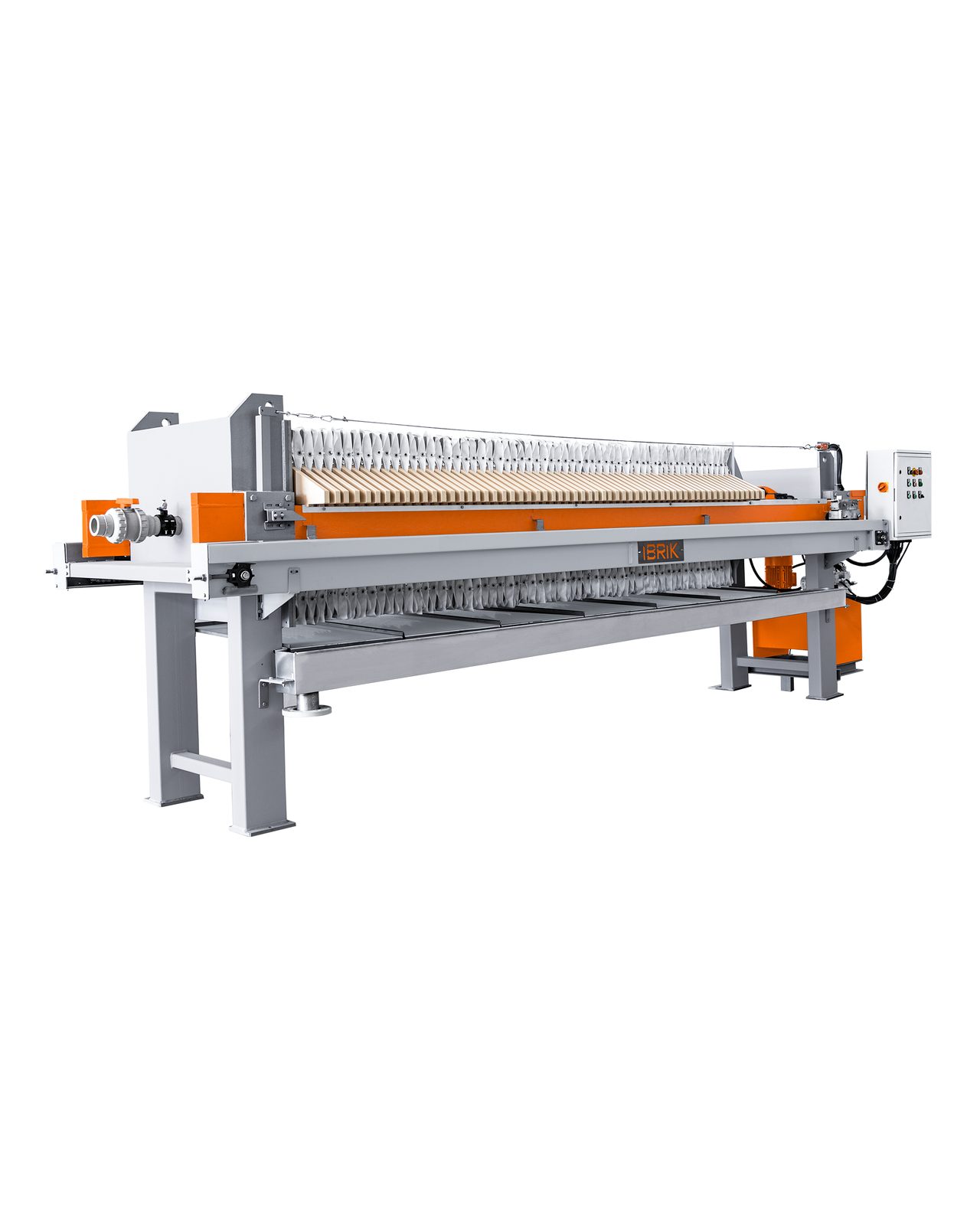
Filter Press
The highest cake dryness thanks to the plate-and-cloth pack (30-40% DS). Manual and fully automatic series — manufactured by GESU.
Screw Press
Continuous dewatering with a low-speed screw (18-25% DS). Low energy, low noise, compact; ideal for small and medium-sized plants.
Belt Press
Continuous pressing between two belts (18-25% DS). An economical solution for high-flow municipal and industrial sludges.
Decanter Centrifuge
Separation by high-speed centrifugal force (20-30% DS). Small footprint, enclosed system, continuous operation.
Application Areas
Municipal Wastewater Treatment Plants
- Dewatering of waste activated (biological) sludge
- Anaerobic sludge stabilization
- Preparation for composting or agricultural use
Industrial Wastewater Treatment Plants
- Dewatering of chemical sludge (metal hydroxide)
- Handling of DAF sludge
- Paint sludge and pigment recovery
The GESU Difference
Related Technologies
Treatment technologies GESU engineers and manufactures.
Biological treatment combined with membrane separation; compact footprint, effluent ready for reuse.
Fill-react-settle-decant cycles in a single tank; flexible for variable loads.
Carrier media biofilm process; capacity upgrade without enlarging the tank.
Chemical conditioning that turns colloids into settleable/floatable flocs.
High-pressure membrane desalination and polishing for water reuse.
Barrier against suspended solids and colloids; standard pre-treatment before RO.
Chemical and biological washing towers for odour, acid and alkaline gas control.
GESU's flagship product: oil, grease and TSS removal, manufactured in-house.
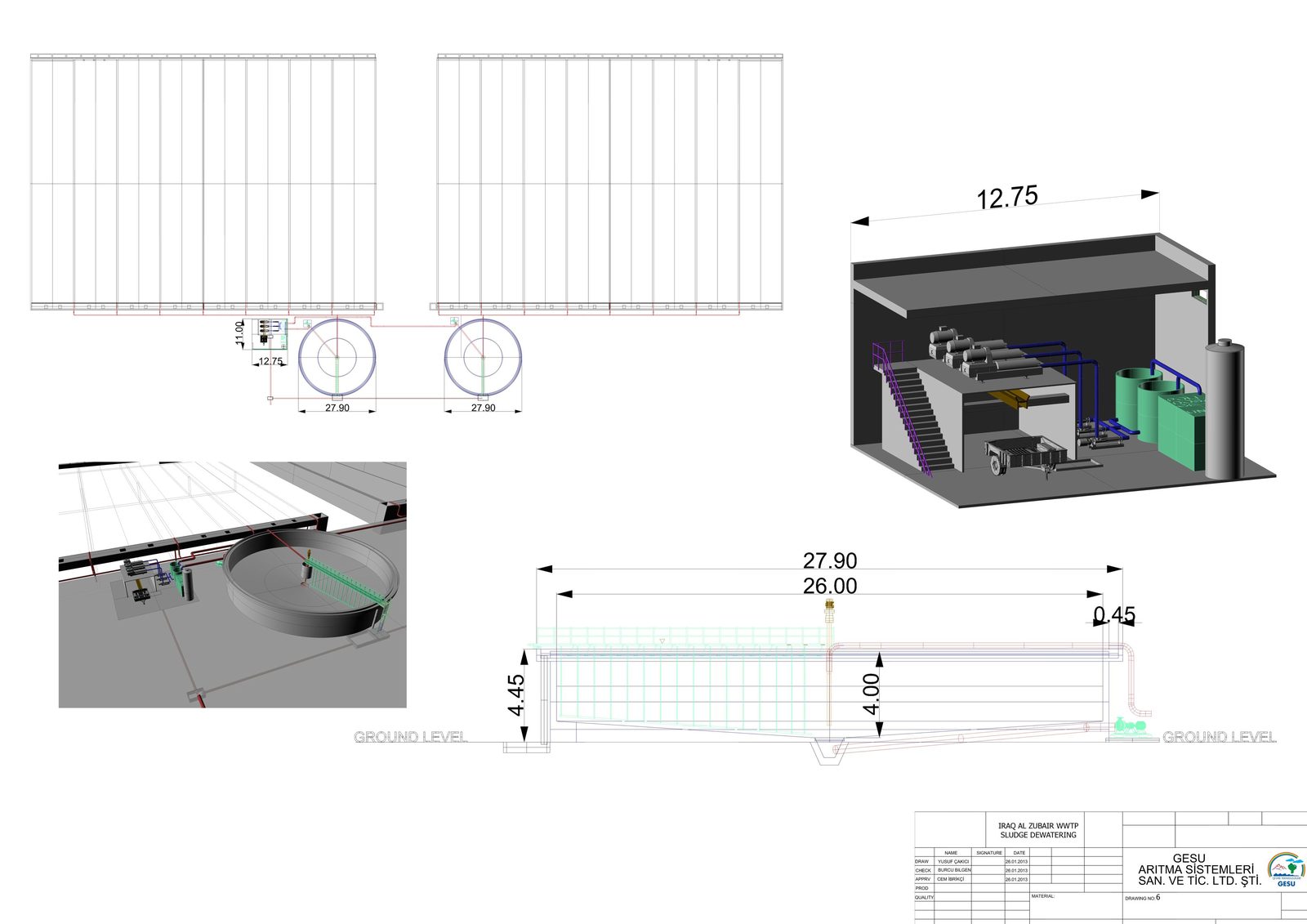
From a GESU Project Drawing
Sludge treatment line — 3D design and fabrication drawing by our own engineering team.
Let's Talk About Your Project
With 30 years of experience, let's determine the most suitable solution for your project together.