
SBR Sequencing Batch Reactor
Compact biological treatment through the fill–aerate–settle–decant cycle in a single basin.
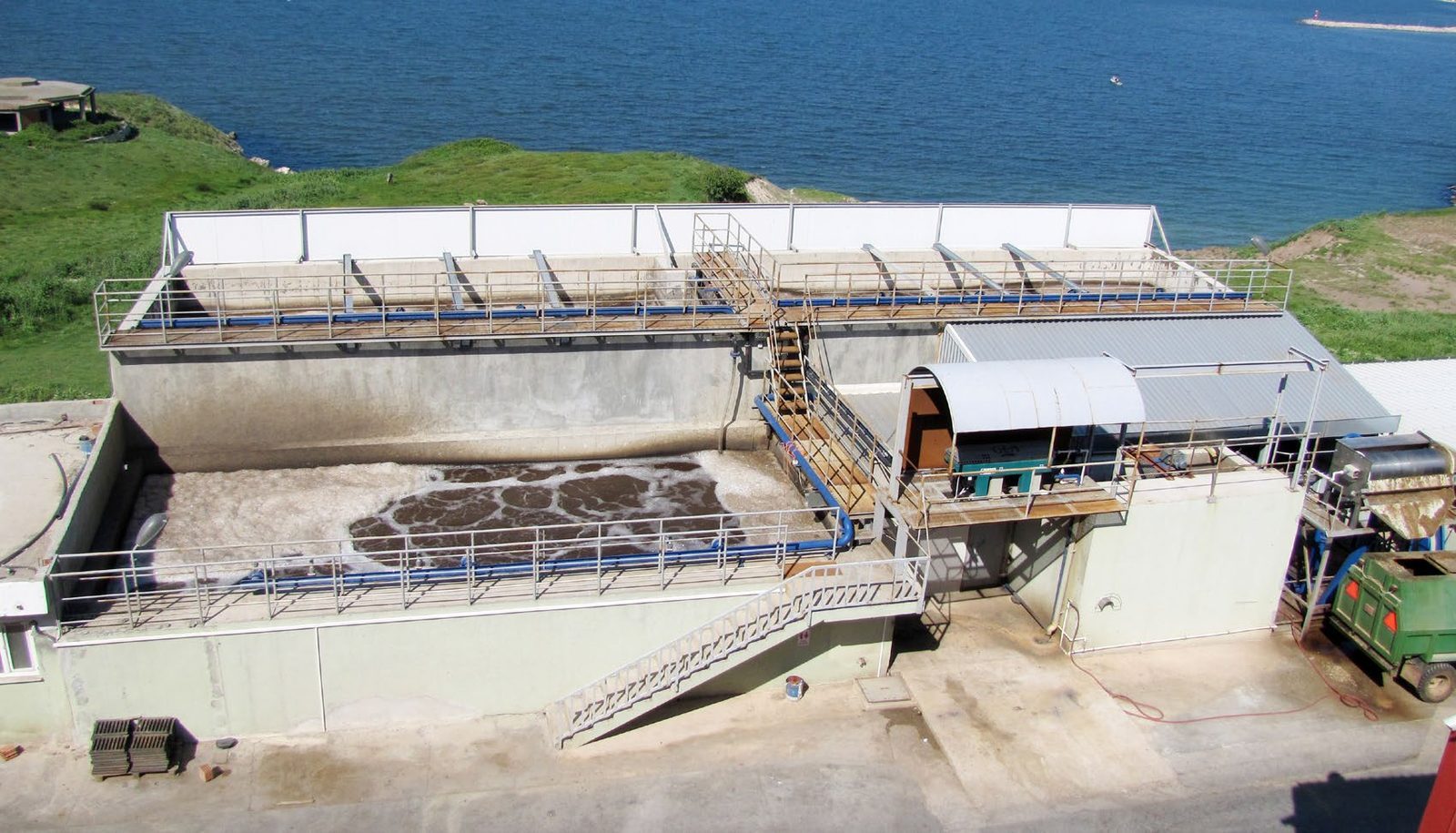
What Is SBR Technology?
SBR (Sequencing Batch Reactor) is the batch version of the activated sludge process. All treatment stages — filling, aeration, settling and decanting — are carried out sequentially in a single basin, on a time basis. No separate settling tank is required.
Because it is extremely flexible against flow and load fluctuations, it is preferred especially in small and medium-scale plants and in industries with seasonal production.
The Operating Cycle
Time Controlled
The duration of each cycle phase is optimized by PLC. It can be adjusted according to nitrogen and phosphorus removal requirements.
Anoxic / Aerobic
By switching the aeration on and off, nitrification and denitrification are achieved in the same basin.
No Settling Tank
Static settling takes place in the same tank, providing a 30-40% saving in footprint.
Application Areas
Domestic & Municipal
- Small settlements (500–50,000 people)
- Holiday resorts (seasonal load)
- Organized industrial zones
Industrial
- Food and beverage (dairy, slaughterhouse, canning)
- Textile finishing wastewater
- Plants subject to nitrogen/phosphorus limits
The GESU Difference
Related Technologies
Treatment technologies GESU engineers and manufactures.
Biological treatment combined with membrane separation; compact footprint, effluent ready for reuse.
Carrier media biofilm process; capacity upgrade without enlarging the tank.
Chemical conditioning that turns colloids into settleable/floatable flocs.
High-pressure membrane desalination and polishing for water reuse.
Barrier against suspended solids and colloids; standard pre-treatment before RO.
Thickening, conditioning and dewatering — filter press, belt press, decanter.
Chemical and biological washing towers for odour, acid and alkaline gas control.
GESU's flagship product: oil, grease and TSS removal, manufactured in-house.
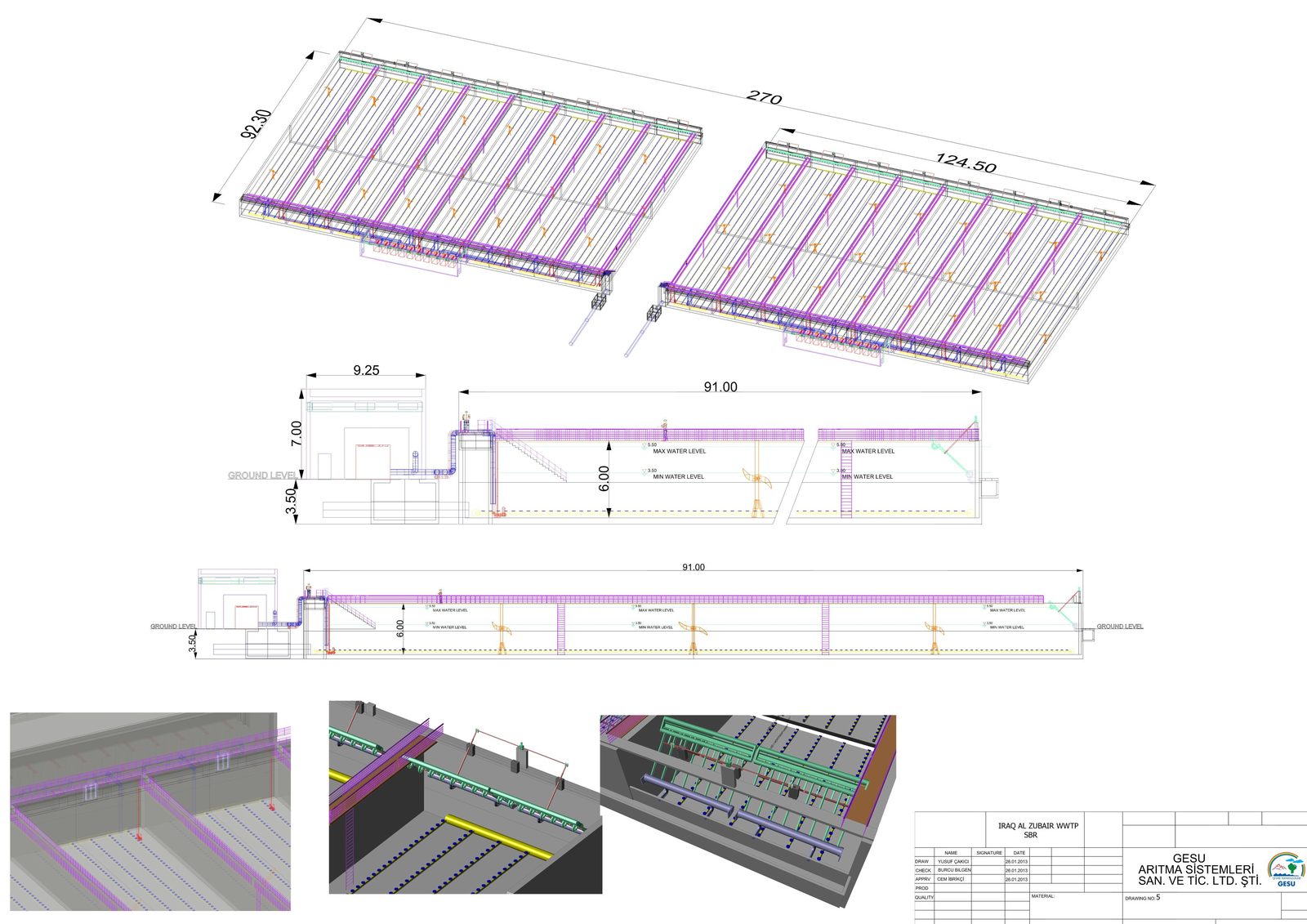
From a GESU Project Drawing
SBR reactor unit — 3D design and fabrication drawing by our own engineering team.
Let's Talk About Your Project
With 30 years of experience, let's define the most suitable solution for your project together.
SBR — Frequently Asked Questions
We have gathered the questions our customers ask most often. If you can't find the answer you're looking for, get in touch with us.
How does an SBR (sequencing batch reactor) work?
SBR is a flexible treatment technology in which the five phases of biological treatment (fill, react, settle, decant, idle) are carried out on a time basis in the same tank. The difference from conventional activated sludge: there is no separate clarifier — settling takes place in the same tank. The phases are managed automatically by PLC control.
In which industries is SBR used?
Because of its flexibility, SBR is preferred in applications with variable flow and load: treatment for small settlements, packaged domestic plants (BioSu SBR), food and beverage (batch production), hotels and holiday resorts, and small-town treatment plants. It is ideal for nutrient (N, P) removal.
What is the energy consumption of SBR?
SBR energy consumption is in the range of 0.5-1.0 kWh/m³. Because aeration is intermittent, it can be 10-20% more efficient than conventional activated sludge.
What are the alternatives to SBR?
Alternatives: conventional activated sludge (continuous flow), MBBR, MBR. Advantages of SBR: (1) a single tank — compact, (2) no clarifier, (3) flexible (adapts to flow/load variation), (4) very good N-P removal. Disadvantage: an equalization tank is required, and because decanting is intermittent, a buffer is needed for the downstream unit.