
Coagulation & Flocculation
Effective solid-liquid separation through chemical destabilization of colloidal particles and floc formation.
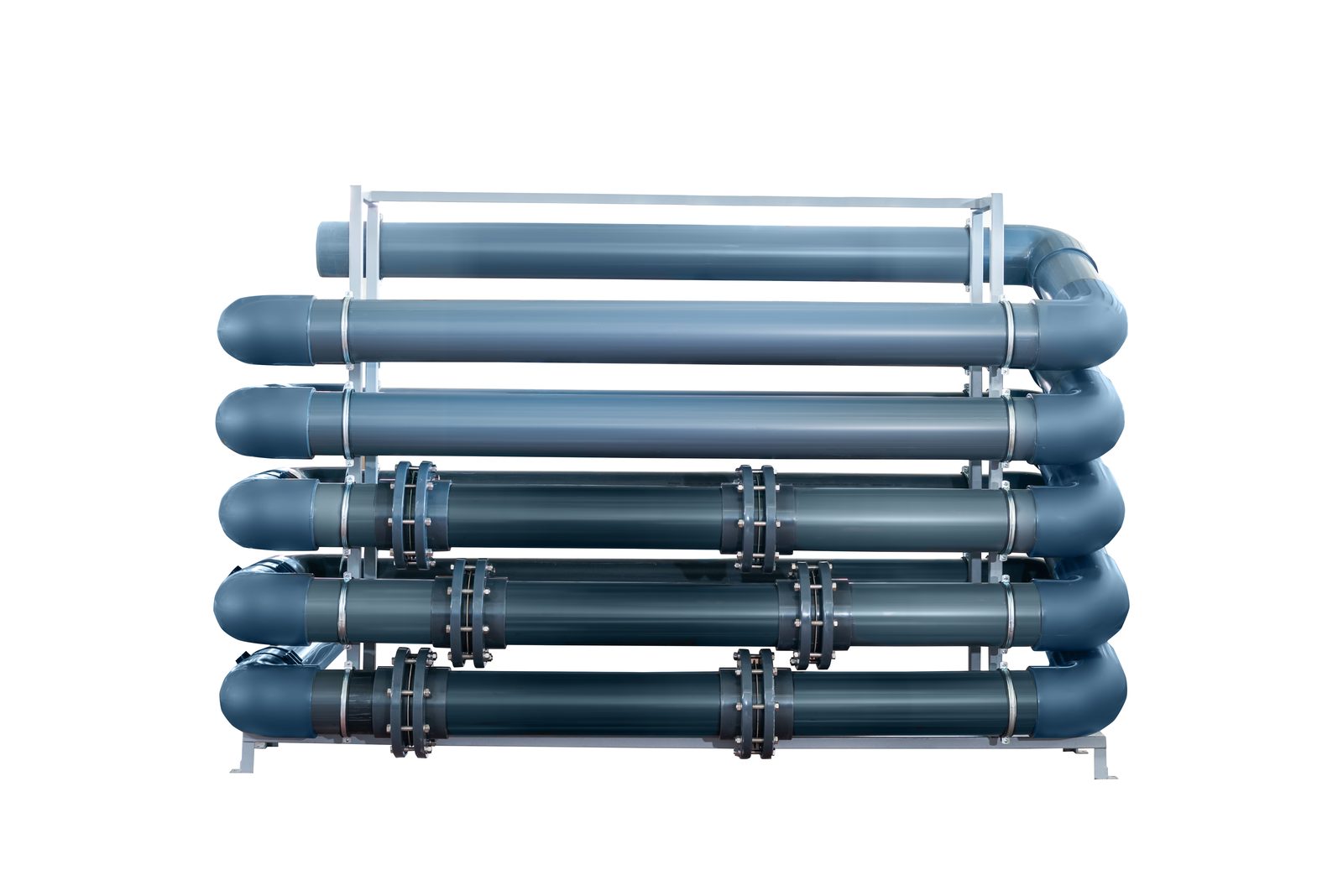
What Are Coagulation & Flocculation?
Coagulation is the process of destabilizing dissolved or colloidal pollutants in wastewater by charge neutralization, achieved by adding chemicals (coagulants). Flocculation is the subsequent step in which these destabilized particles are bound together with the help of a polymer to form large flocs suitable for settling.
Together, this pair of processes achieves high efficiency in the removal of total suspended solids (TSS), turbidity, color, phosphorus and heavy metals.
Working Principle
Coagulant Selection
PAC, FeCl₃, Al₂(SO₄)₃ — the most suitable coagulant for the wastewater characteristics is determined by jar testing.
Polymer Dosing
Floc growth with anionic, cationic or non-ionic polymer. Automatic preparation unit included.
Jar Test Support
The optimum chemical and dosage are determined by jar testing in the GESU laboratory.
Areas of Application
Industries
- Textile (color and turbidity removal)
- Metal finishing (heavy metal precipitation)
- Food (oil & grease and TSS removal)
- Pulp & paper
- Chemical and pharmaceutical industry
Removal Efficiency
- TSS: 90-99% removal
- Color: 85-95% removal
- Phosphorus: 90-95% removal
- Heavy metals: 95-99% removal
- COD: 50-70% pre-removal
The GESU Difference
Related Technologies
Treatment technologies GESU engineers and manufactures.
Biological treatment combined with membrane separation; compact footprint, effluent ready for reuse.
Fill-react-settle-decant cycles in a single tank; flexible for variable loads.
Carrier media biofilm process; capacity upgrade without enlarging the tank.
High-pressure membrane desalination and polishing for water reuse.
Barrier against suspended solids and colloids; standard pre-treatment before RO.
Thickening, conditioning and dewatering — filter press, belt press, decanter.
Chemical and biological washing towers for odour, acid and alkaline gas control.
GESU's flagship product: oil, grease and TSS removal, manufactured in-house.
Let's Talk About Your Project
With our 30 years of experience, let's determine the most suitable solution for your project together.
Coagulation & Flocculation — Frequently Asked Questions
We have gathered the questions our customers ask most often. If you can't find the answer you are looking for, get in touch with us.
How does coagulation-flocculation work?
Coagulation is the electrical neutralization of colloidal particles in water so that they can come together. The coagulant (PAC, alum, FeCl3) is dosed under rapid mixing (G=600-1000 s⁻¹, 1-3 minutes). Flocculation then follows under slow mixing (G=20-80 s⁻¹, 15-30 minutes), forming large flocs with polymer. The flocs are separated by sedimentation.
In which industries is it used?
Textile (color removal), paper, drinking water, leather, metal (heavy metal precipitation), food, chemicals — it is a fundamental stage in almost all industrial wastewater applications.
What is the energy consumption?
The energy consumption of coagulation-flocculation is in the range of 0.02-0.08 kWh/m³ (mixers only).
What are the alternatives?
There are almost no alternatives — it is the only practical method for removing colloidal particles. Membrane filtration is an alternative. The correct chemical selection (PAC vs alum vs FeCl3) is made by jar testing.