
Reverse Osmosis RO Membrane
Removal of dissolved salts, minerals and organic matter at 95-99% with high-pressure membranes.
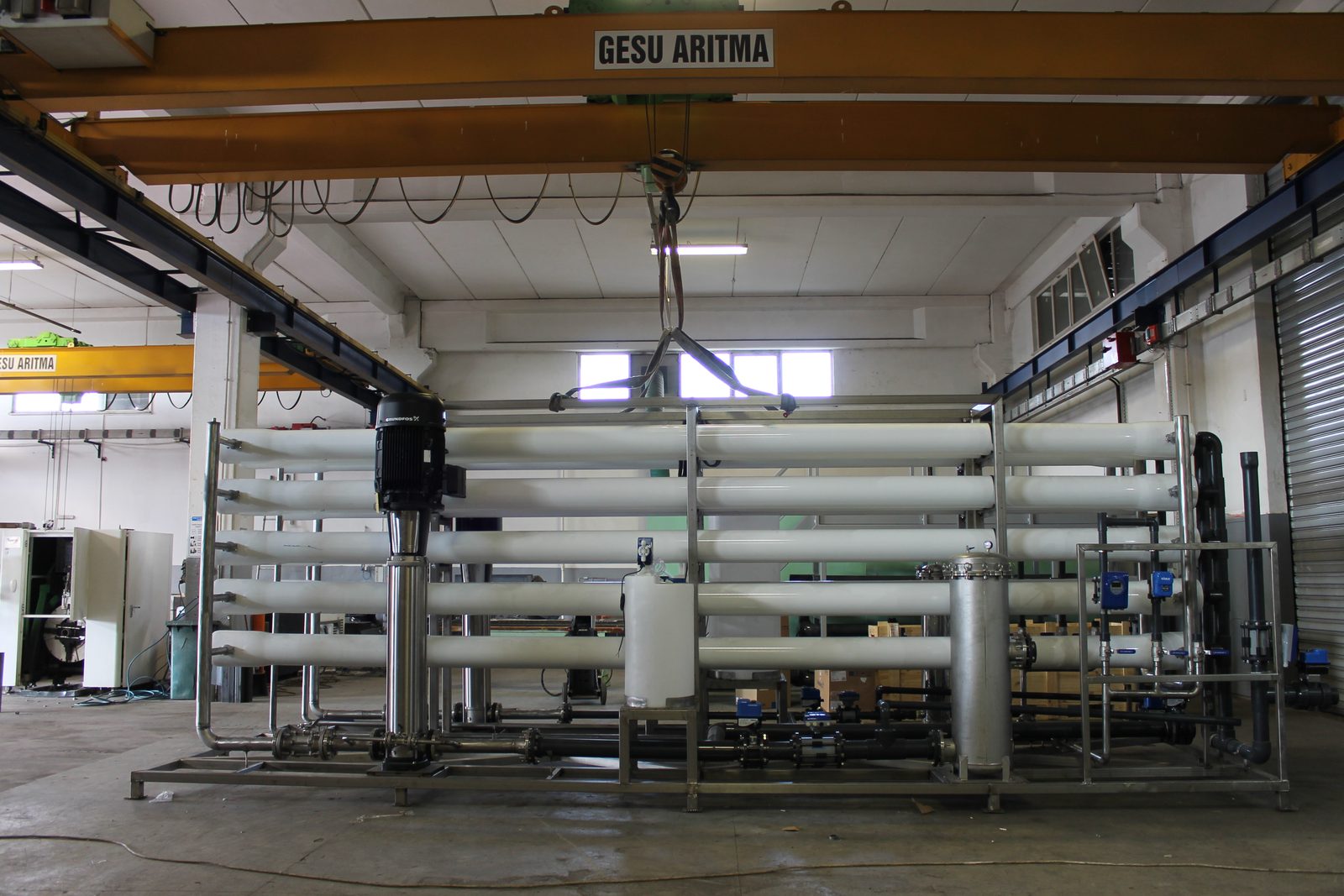
What Is Reverse Osmosis (RO)?
Reverse osmosis is the process in which pressure applied to one side of a semi-permeable membrane moves water against the direction of natural osmosis, so that dissolved salts, minerals and organic compounds are retained.
RO is a critical technology in industrial water reuse, ZLD (Zero Liquid Discharge), process water production and saline water treatment applications. With a pore size of ~0.0001 µm it retains almost all dissolved matter.
Typical RO System Flow
High Pressure
10-70 bar operating pressure (fresh water: 10-15, seawater: 55-70 bar). Energy recovery units.
Membrane Configuration
Spiral wound membranes, 4" and 8" elements. Single or double pass design.
Membrane Protection
Antiscalant dosing, CIP (chemical cleaning) system, SDI and turbidity monitoring.
Application Areas
Industrial
- Wastewater reuse (process water)
- ZLD (Zero Liquid Discharge) systems
- Boiler feed water production
- Textile, chemical and automotive industries
Water Supply
- Saline and brackish water treatment
- Seawater desalination
- Drinking water production
- Ultrapure water (electronics, pharmaceuticals)
Technical Characteristics
Related Technologies
Treatment technologies GESU engineers and manufactures.
Biological treatment combined with membrane separation; compact footprint, effluent ready for reuse.
Fill-react-settle-decant cycles in a single tank; flexible for variable loads.
Carrier media biofilm process; capacity upgrade without enlarging the tank.
Chemical conditioning that turns colloids into settleable/floatable flocs.
Barrier against suspended solids and colloids; standard pre-treatment before RO.
Thickening, conditioning and dewatering — filter press, belt press, decanter.
Chemical and biological washing towers for odour, acid and alkaline gas control.
GESU's flagship product: oil, grease and TSS removal, manufactured in-house.
From GESU Manufacturing
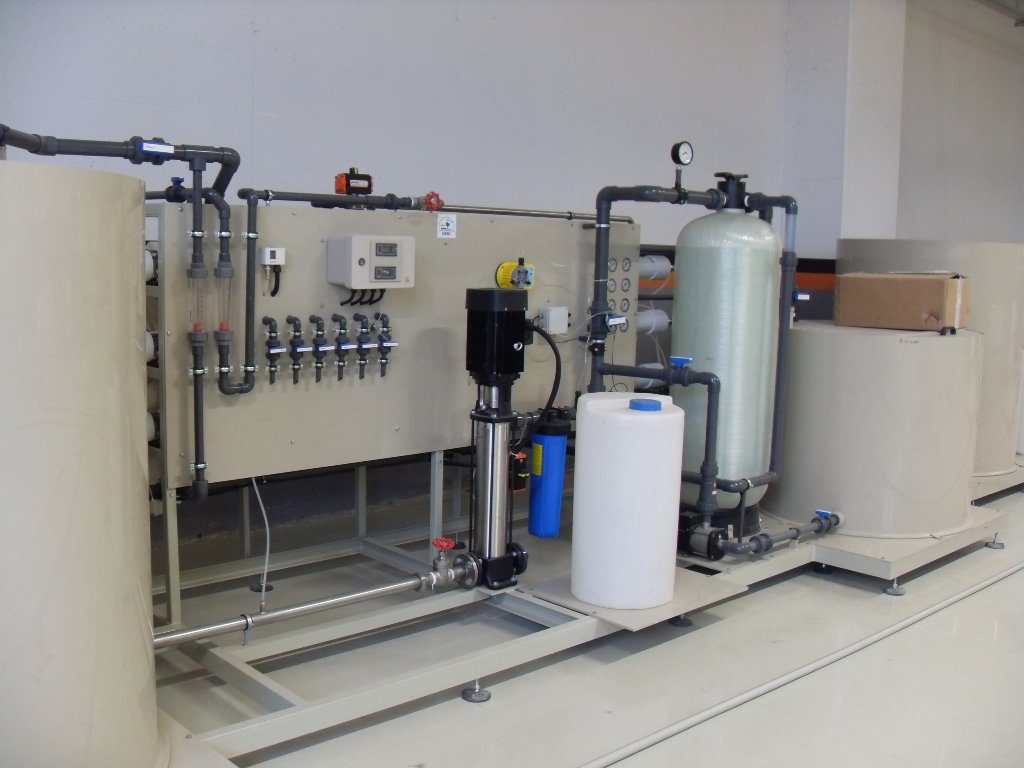
GESU reverse osmosis (RO) system — our own manufacturing
Let's Talk About Your Project
With 30 years of experience, let's determine the most suitable solution for your project together.
RO (Reverse Osmosis) — Frequently Asked Questions
We have gathered the questions our customers ask most often. If you cannot find the answer you are looking for, get in touch with us.
How does RO (reverse osmosis) work?
RO is a membrane technology in which water is separated from salts under high pressure (10-70 bar) by means of a semi-permeable membrane. At a pore level of 0.0001 µm the membrane retains 95-99% of all ions, organics and microorganisms. Spiral-wound modules are the standard. Recovery rate 50-85%.
In which industries is it used?
Water reuse, seawater/brackish water desalination, beverage (process water), electronics (ultrapure water), pharmaceuticals, boiler feed water, wastewater reuse, ZLD pre-stage.
Energy consumption?
RO energy consumption depends on the water type: brackish water 1-3 kWh/m³, seawater 3-6 kWh/m³, wastewater reuse 1-2 kWh/m³. With energy recovery devices (ERD), 30-40% energy savings are possible.
What are the alternatives?
Alternatives: nanofiltration (NF, lower pressure, monovalent ions pass through), electrodialysis (EDR), ion exchange, distillation (high energy). RO is the most widespread and most economical desalination technology.