Water Reuse & ZLD
Turn wastewater into process water. How the recovery chain works, where it makes sense and what to watch out for in operation.
What Are Water Reuse and ZLD?
Water reuse is the practice of upgrading treated wastewater to process water quality with advanced membrane technologies (UF + RO) and using it again. ZLD (Zero Liquid Discharge) is the goal of recovering the wastewater in its entirety so that no liquid is discharged at all and only solid salt remains. In other words, reuse is an axis and ZLD is the far end of that axis.
Growing pressure on water supply, declining security of supply, tightening discharge regulations and corporate sustainability targets are driving industrial plants towards reuse. The question is no longer “how do I discharge my wastewater” but “how much of my wastewater can I recover”.
This is GESU's strategic focus: no longer treating wastewater as something to be disposed of, but as a resource that gives water back to the plant. With engineering plus its own equipment manufacturing capacity, GESU delivers turnkey reuse solutions from wastewater characterisation to pilot testing, and from full-scale plant construction to operation. This article explains, step by step, how the system works, where it makes sense and what to pay attention to in operation.
How Does Water Reuse Work? — Step by Step
Wastewater passes through a series of barrier stages, each of which cleans up the outlet of the previous one. The aim: to produce water clean enough to feed the next membrane, and to collect the pollutant load in a concentrate stream that keeps getting smaller.
Pre-treatment & Equalisation
Coarse solids, oil and grease, grit and peak loads are removed; flow and pollutant fluctuations are equalised. If pre-treatment is weak, every downstream membrane stage fouls prematurely.
Biological Treatment (preferably MBR)
Organic matter (COD/BOD) and nitrogen are removed biologically. If an MBR is used, the effluent is completely free of suspended solids and bacteria and has a low SDI — the ideal feed for RO.
Fine Filtration (UF)
Where conventional biological treatment is in place, ultrafiltration is added ahead of the RO to retain suspended solids and colloids. (Because an MBR already contains a membrane barrier, a separate UF stage is usually not needed.)
Reverse Osmosis (RO) — Salt Removal
Dissolved salts, conductivity and micro-pollutants are removed. The outlet is permeate at process/boiler/cooling water quality; on the other side, a concentrate forms in which the salt is concentrated. For high recovery, a second RO stage is added.
Concentrate Management & (for ZLD) the Thermal Stage
The remaining concentrate is handled in one of three ways: discharge (where permitted), volume reduction with a high-recovery RO, or conversion into solid salt with an evaporator + crystalliser for ZLD. In ZLD, liquid discharge is zero.
The ZLD Process Chain
Membrane Systems
85-95% water recovery with UF + RO + NF combinations. The concentrate volume is kept to a minimum.
Evaporation
Thermal evaporation of the RO concentrate. MVR and vacuum evaporator technologies.
Crystallisation
In the final stage, salt crystallisation yields an entirely solid residue. True ZLD.
Levels of Recovery
Basic Recovery
Biological + UF + single-stage RO.
Advanced Recovery
Two-stage RO + concentrate management. Minimum discharge.
ZLD (Zero Discharge)
RO + evaporator + crystalliser. No liquid discharge at all.
The rates given are typical orders of magnitude in the industry; the actual recovery rate varies with the salinity and organic load of the wastewater and with the target water quality, and is established by plant-specific analysis and pilot work.
In Which Sector / Situation Does It Make Sense?
Reuse is meaningful at any plant, but it becomes compelling far more quickly in sectors with high water consumption, closely monitored discharge or constrained water supply. The values below are typical tendencies — the final design rests on water analysis.
| Sector / Situation | Why Reuse Makes Sense | Typical Chain | Typical Recovery |
|---|---|---|---|
| Food & Beverage | High water consumption, seasonal load, demand for wash/CIP water | DAF → MBR → RO | Typically 70-90% |
| Integrated Meat Plant | Heavy organic and fat load; demand for boiler/cooling water | DAF → MBR → RO | Typically 75-90% |
| Textile & Dyehouse | High colour, salt and water consumption; strict discharge limits | Biological → UF → RO (2 stages) | Typically 60-85% |
| Metal & Plating | Heavy metals + salt; potential for recovering valuable metals/acids | Chemical → UF → RO → (ZLD) | Typically 60-80% |
| Pulp & Paper | Very high process water demand; trend towards closed loops | DAF → Biological → UF → RO | Typically 65-85% |
| Industrial Park / Municipal | Large volumes for irrigation, landscaping and secondary uses | MBR → UF → RO | Typically 70-90% |
| Water-scarce Region / Mandatory Zero Discharge | A legal ZLD obligation, or water supply simply not available | RO → Evaporator → Crystalliser | Typically ~100% (ZLD) |
Note: the rates and chains in the table are typical orders of magnitude, not commitments. For every project the real values are verified by laboratory analysis and pilot work.
Operating Tips
The success of a reuse plant shows up in operation far more than in construction. Disciplined operation that protects the membranes determines both the water quality and the service life of the installation.
Never neglect pre-treatment
Most RO/UF failures originate in inadequate pre-treatment. Stopping oil and grease, suspended solids and peak loads before they reach the membrane is the most effective safeguard there is.
Track differential pressure and flux daily
A rise in transmembrane pressure (TMP) and a fall in permeate flux are the early warnings of fouling and scaling. Following the trend lets you catch blockage before the scheduled cleaning date arrives.
Set up antiscalant and CIP dosing properly
The right antiscalant prevents scale and silica precipitation at high recovery. Planned chemical cleaning (CIP) extends membrane life; a cleaning that is left too late causes irreversible flux loss.
Optimise the recovery rate rather than forcing it
Very high recovery increases concentrate salinity and the risk of precipitation. An operating point that keeps water quality, chemical consumption and energy demand in balance serves the plant better than the maximum on paper.
Keep records, train the operator
Records of conductivity, flow, pressure and chemical consumption are the only way to find the root cause of a problem. A trained operator is worth more than any membrane set.
In Practice: the DAF → MBR → RO Recovery Chain
How the stages described above work together is made concrete by the recovery line GESU is currently building at the Namet Gümüşova integrated meat plant in Türkiye.
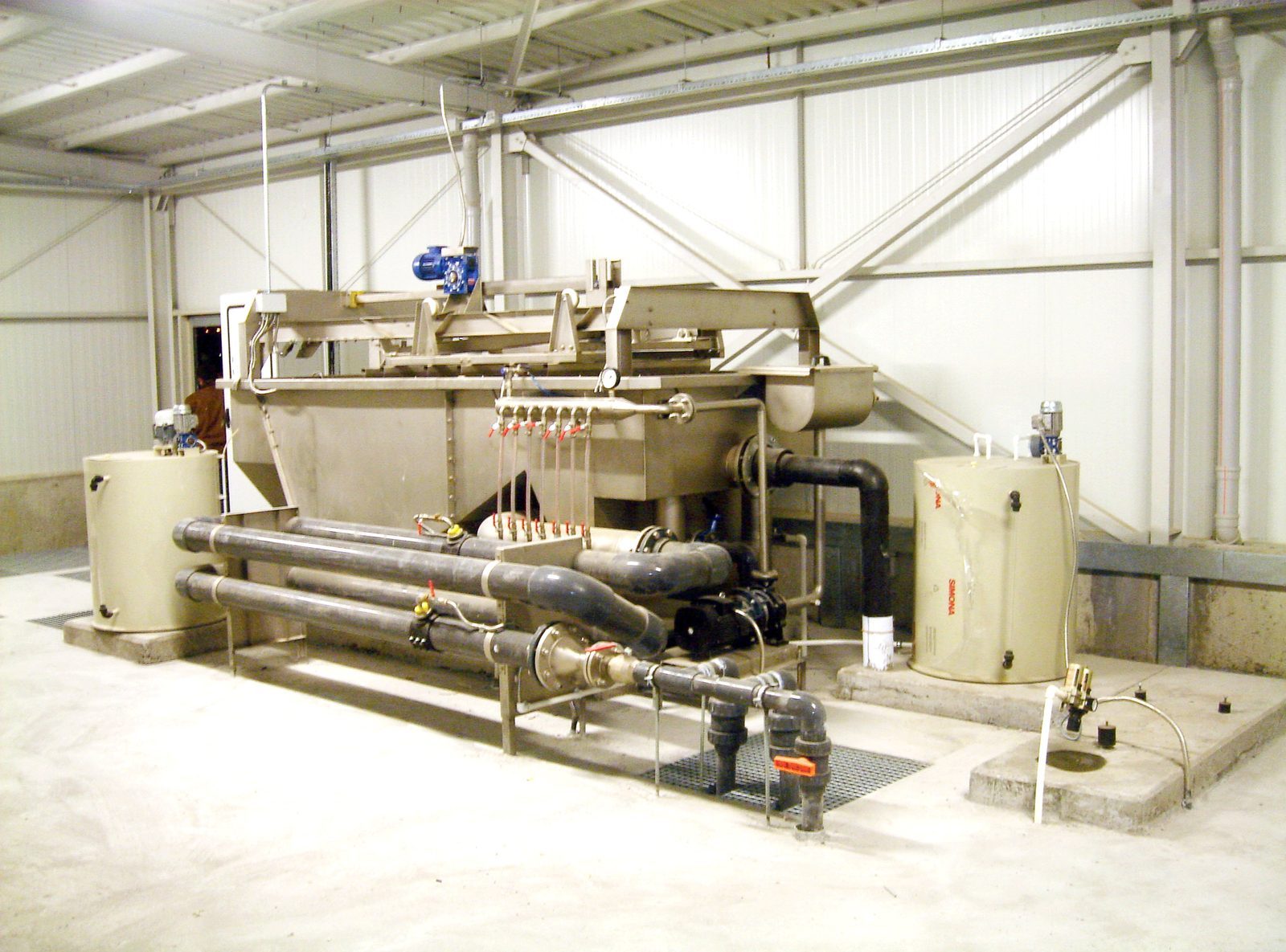
At the Gümüşova factory of Namet, one of Türkiye's large integrated meat producers, the line GESU is building will first pre-treat the heavily organic, fat-laden wastewater with a DAF unit, then clarify it biologically with a Kubota flat-sheet MBR. The high clarity of the MBR effluent forms the ideal feed for the RO placed behind it.
Once commissioned, the reclaimed water will return to the factory as boiler feed and cooling water — that is, wastewater will become a resource given back to the plant. Installation is under way; commissioning is scheduled for the end of 2026. This chain is a concrete example of the principle of treating wastewater as a resource rather than as waste.
The GESU Difference
Related Solutions & Detail Pages
Municipal Water Reuse
Reuse of municipal and industrial-park wastewater for irrigation and secondary uses.
MBR (Membrane Bioreactor)
The biological stage that produces the ideal feed water for RO.
Ultrafiltration (UF)
The pre-filtration technology that retains suspended solids and colloids ahead of RO.
Reverse Osmosis (RO)
The membrane technology at the heart of salt removal and water recovery.
Let's Talk About Your Project
With 30 years of experience, let's define the most suitable solution for your project together.
Water Reuse & ZLD — Frequently Asked Questions
These are the questions engineers ask us most often. If you can't find the answer you're looking for, get in touch with us.
What is the difference between water reuse and ZLD (zero liquid discharge)?
Water reuse means upgrading part of the treated wastewater (typically 60-95%) to process water quality with membranes and using it again; a concentrate/discharge stream remains. ZLD goes one step further and also processes that concentrate through an evaporator and a crystalliser, reducing liquid discharge to zero; only solid salt is left behind. ZLD is the most advanced and the most energy-intensive step of the reuse ladder.
What percentage of my wastewater can I recover?
That depends on the salinity of the wastewater (conductivity/TDS), its organic load and the target water quality. Typically 60-75% is achieved with biological treatment + UF + single-stage RO, 85-95% with two-stage RO and concentrate recovery, and close to 100% (ZLD) once an evaporator/crystalliser is added. The exact rate can only be established through water analysis and, preferably, a pilot test.
Can the reclaimed water be used as drinking water?
In industrial reuse projects the target is generally not drinking water but process water, boiler feed water, cooling tower make-up, wash water or irrigation water. Each of these uses has its own quality requirement and the system is sized accordingly. Potable reuse is a separate application that demands far stricter barriers and monitoring.
What happens to the RO concentrate (the reject stream)?
The concentrate is the stream in which salts and pollutants are concentrated, and it is the most critical design item of any reuse project. The options are: reducing its volume with a second-stage/high-recovery RO, discharging it within the discharge limits (where permitted), or converting it into solid salt with an evaporator-crystalliser for ZLD. No reuse project can be properly scoped before the concentrate strategy is decided.
How do MBR and RO work together?
An MBR (membrane bioreactor) removes organic matter and produces an effluent that is extremely clear in terms of suspended solids and bacteria, with a low SDI. This water is the ideal feed for RO membranes; the RO in turn removes dissolved salts and produces permeate at process water quality. The MBR+RO chain is the most common backbone of reuse plants.
Why is a pilot test important?
Every wastewater is unique; the recovery rate that looks right on paper can turn out differently in the real water because of fouling and scaling. A pilot test verifies membrane flux, chemical consumption, cleaning frequency and the achievable recovery rate with the actual feed water. This is what allows the full-scale plant to be sized correctly and avoids surprises in operation.
Can water reuse be added to an existing treatment plant?
Yes. At many plants, reuse can be brought online by adding a UF+RO (tertiary treatment) unit downstream of the existing biological treatment. The critical question is whether the current effluent quality is good enough to feed the membranes; if not, an MBR conversion or additional pre-treatment is placed in front. GESU carries out existing-plant assessments and retrofit design.